
How and When to Visit the North Cascades National Park
The Cascade Loop is one of the most popular road trips in Washington State. This 440-mile scenic drive circles the Cascade Mountains, connecting destinations like the North Cascades National Park, to Winthrop, Chelan, Leavenworth, Stevens Pass, and Whidbey Island.
Our itinerary breaks the loop into a one-to seven-day road trip, with suggestions on how to adjust it if you have more or less time.
Know what you’re interested in? Click below to skip to a section.
Getting to the North Cascades National Park
North Cascade National Park entrances and fees
How busy is the North Cascades National Park?
Is the North Cascades National Park pet-friendly?

Getting to the North Cascades National Park
The closest major airport to the North Cascades is Seattle-Tacoma International Airport (SEA), located about three hours from North Cascades National Park. You can also fly into the Bellingham International Airport (BLI). It’s closer, about two hours away, but it offers fewer flight options.
Lastly, you can also consider flying into the Vancouver International Airport (YVR) in Canada. It’s about a three-hour drive to North Cascades National Park, but you’ll need a passport. Border crossings can take 15 minutes to over an hour (holidays have particularly long waits).
When to visit
Spring
Late April to June
Spring marks the end of the rainy season and is one of the best times to see waterfalls in the North Cascades. Small seasonal waterfalls appear throughout the drive along Highway 20. It’s not a great time for hiking, though. Most trails will still be inaccessible and covered in snow.
Another big draw in April is the Skagit Valley Tulip Festival. It’s popular and busy, but a great sight to combine with a trip to the North Cascades National Park if it’s open (more on that below).

Summer
July to September
Summer is the best time to visit for hiking and more reliable weather. By July, most forest roads and trails at high-elevation have melted out and reopened.

Fall
October to November
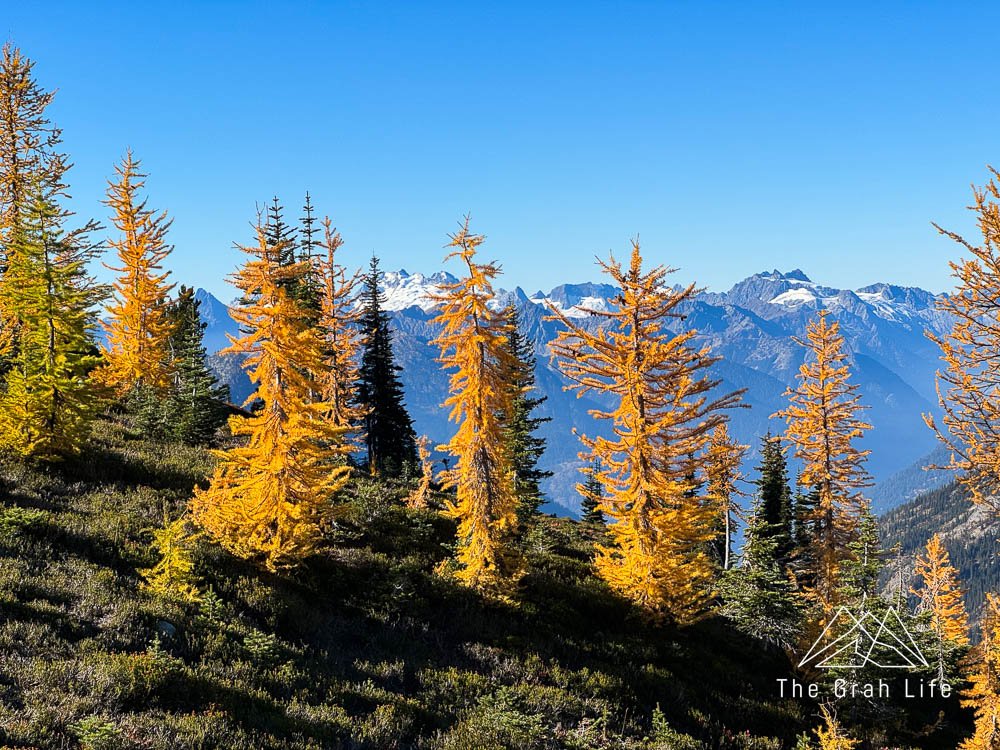
Washingtonians flock to the mountains in early to mid October to see colors changing. Look for the yellowing larches (one of a few deciduous conifers) at high elevations, but be prepared for sudden weather changes.
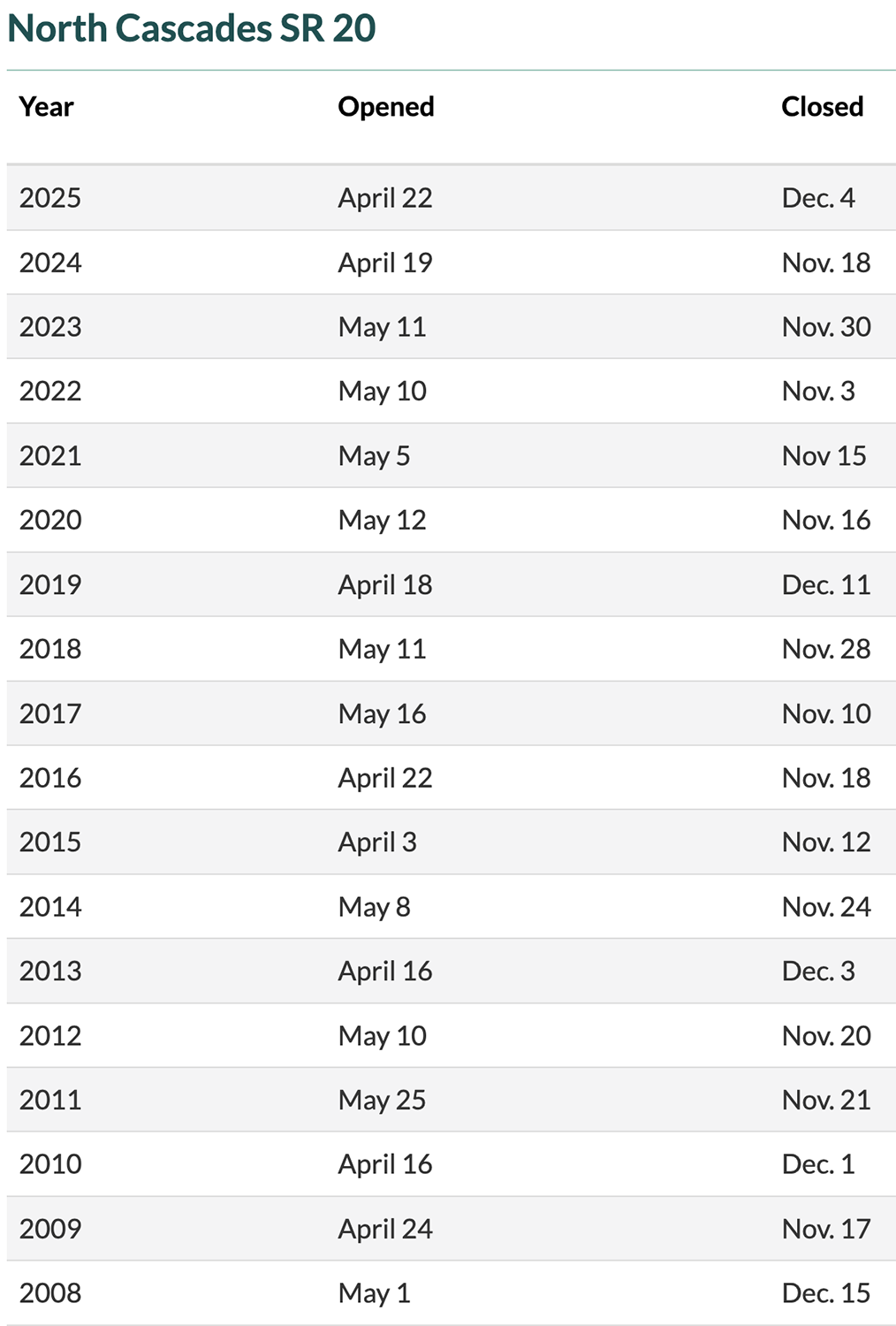
Highway 20 usually closes for the season in mid November (more on that below), and the closer you get to winter, the unpredictable the weather.
Winter
November to late April
During winter, Highway 20 through North Cascades National Park closes, making this section of the Cascade Loop Scenic Drive impassable.
However, the route our itinerary covers, between Whidbey Island and Winthrop, is still beautiful in winter. Just be sure to check Highway 2’s mountain pass conditions before heading out.

Weather and road conditions
Check weather and road conditions before starting your drive through the Cascade Mountains. You can check mountain pass conditions here and check weather reports throughout the Cascade Loop here.
If you’ll be traveling in the early spring or late fall, check to see if Highway 20 is open here. You can also see past opening and closing dates here. The timing varies each year depending on how much snow falls during winter.
Source: wsdot.wa.gov
North Cascades Park entrances and fees
Unlike most national parks, North Cascades National Park does not have a traditional entrance station, and there is no fee to drive through.
Some trailheads do require a Northwest Forest Pass to park. If you already have the America the Beautiful Pass, it can be used instead.
To see if a trail requires a parking pass, search for the hike on wta.org. Under the map, check the “before you go” section for parking details.
How busy is the North Cascades National Park?
Is the North Cascades National Park crowded? Yes and no. Let me use data to explain.
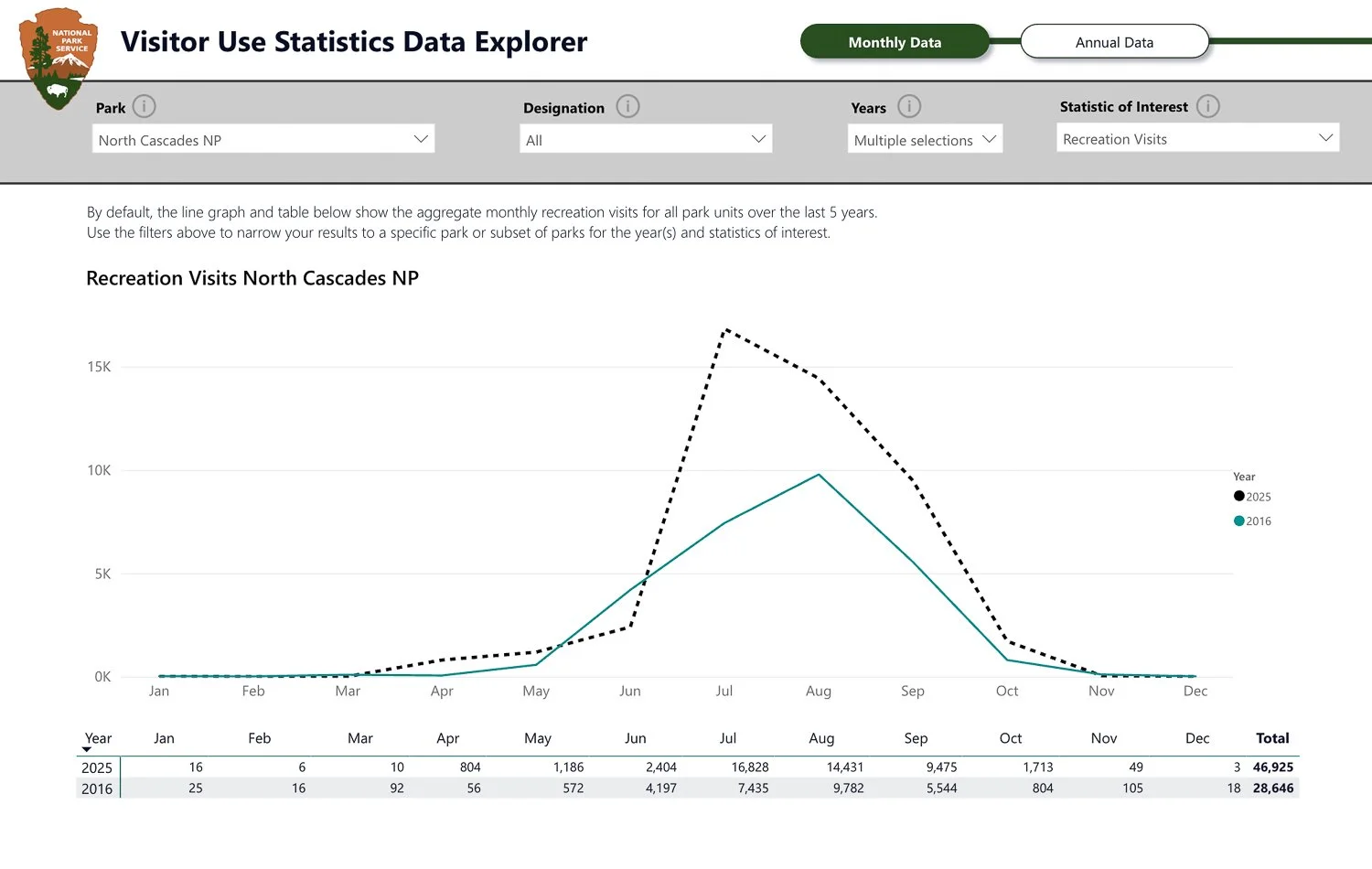
The North Cascades National Park is Washington’s least visited national park with 46,925 visitors in 2025 (source). In comparison, Mount Rainier saw 1,635,342 visitors in 2025 and the Olympics saw 3,584,187.
These numbers sound promising, right? They’re actually misleading.
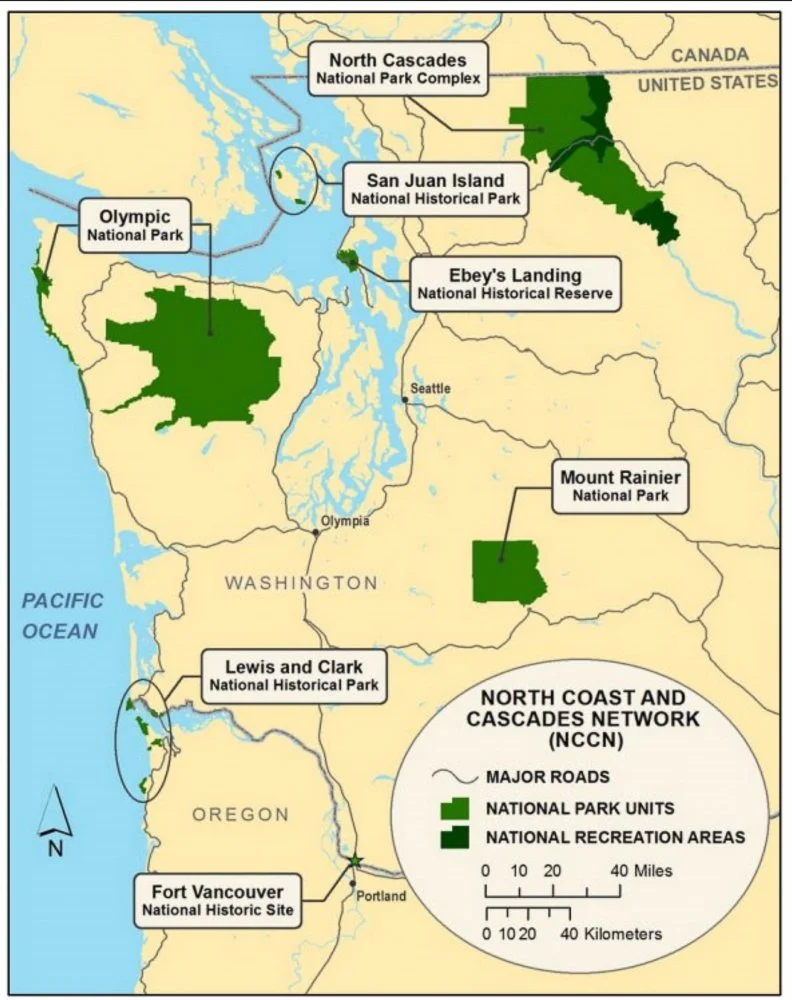
Look at the map below showing where the North Cascades National Park is. See the darker green surrounding Highway 20 and the top of Lake Chelan? These areas aren’t a part of the national park. They are national recreation areas, including Diablo Lake, Newhalem, the Ross Lake National Recreation Area, and Lake Chelan Recreation Area (part of the North Cascades National Park Complex).
Visitors who stay in these recreation areas are not counted in the national park’s visitation statistics – and most people never go beyond these areas into the national park.
Source: nps.gov
Data from 2016 shows nearly 980,000 people visited the North Cascades National Park Complex when the recreation areas were included (source). For perspective, compare the park’s reported visitation numbers from 2016 to 2025 in the graph below.
Source: nps.gov
So what does that mean for crowds?
If you hike deep into North Cascades National Park, you’ll likely find solitude, but the easily accessible areas along Highway 20 can still feel busy.
Is it worth visiting?
Absolutely. Just don’t assume it will feel empty based on the park’s official visitation numbers.
Is the North Cascades National Park pet-friendly?
The North Cascades Recreation Areas and Cascade Loop are very pet friendly. In the park, pets are allowed at campgrounds, picnic areas, and on paved and dirt roads. They’re also permitted in the Ross Lake National Recreation Area, Lake Chelan National Recreation Area, Mount Baker–Snoqualmie National Forest, and Washington State Parks.
Pets are not allowed inside North Cascades National Park or on parts of the Pacific Crest Trail.
To find pet-friendly hikes, download the Washington Trails Association Trailblazer app and filter for pet-friendly trails. You can also check our itinerary linked below for a list of our favorite pet-friendly hikes along the route.
Where to stay
We’ve rounded up the best lodging near North Cascades National Park in this guide. You can also find lodging options along the rest of the Cascade Loop here.
Popular destinations like Leavenworth fill up quickly in peak season. Smaller communities, such as Stehekin, Concrete, and Marblemount, can book out just as fast, so reserve early if you’re visiting in summer or fall.
Hiking
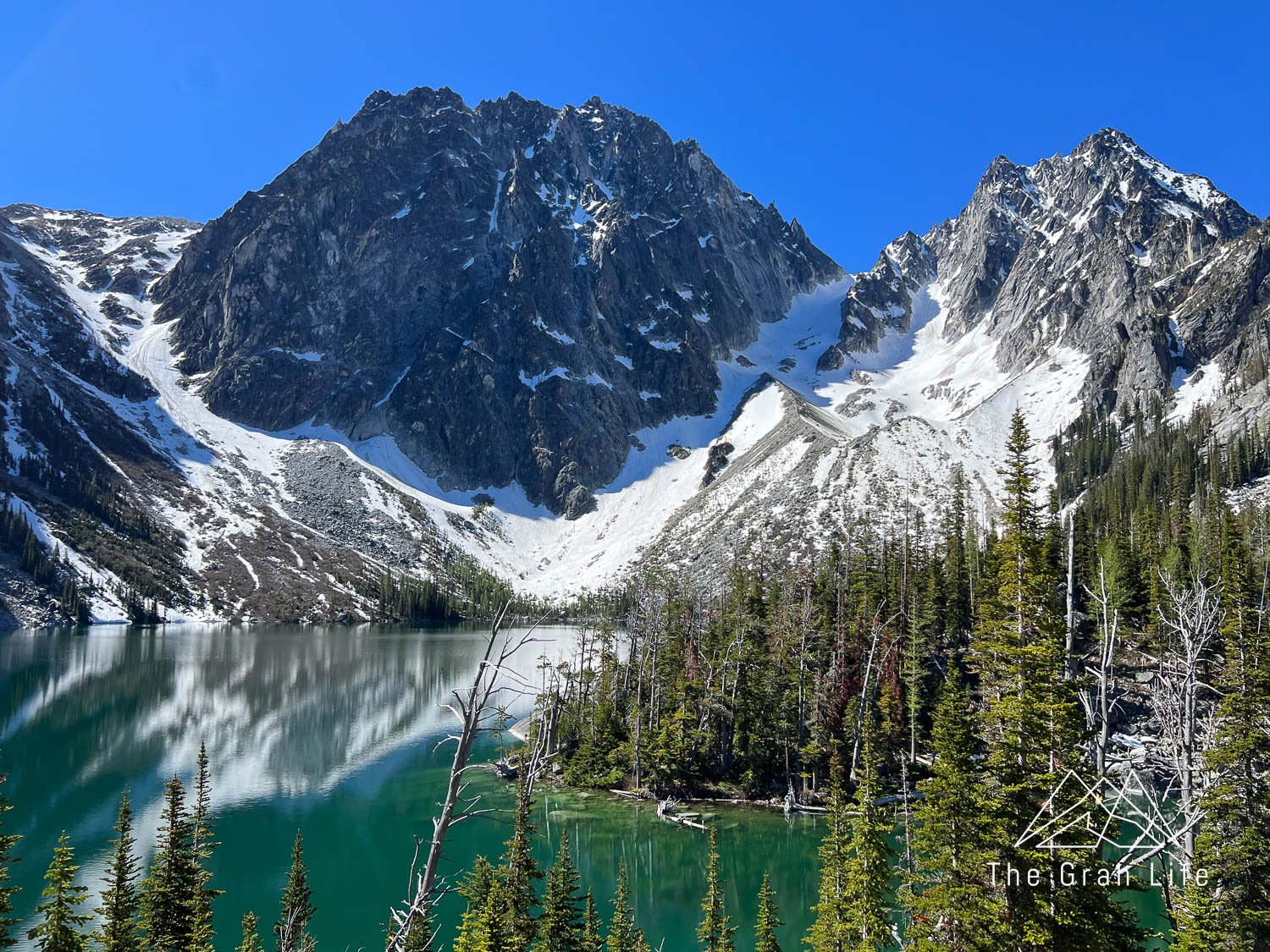
The North Cascades are a paradise for hikers. More than 93% of the park is designated wilderness, which means the farther you hike, the more remote it becomes.
Read this guide for our favorite hikes in and around North Cascades National Park.

North Cascades National Park 1-7 day itinerary
Use our printer-friendly North Cascades National Park itinerary to visit the park between May and October with your own vehicle. It’s an active, fast-paced itinerary featuring scenic drives, hiking suggestions, activity ideas, restaurant recommendations, and the best viewpoints.
This road trip starts and ends in Seattle and follows the Cascade Loop along Highway 2, with stops in Leavenworth, Winthrop, through the North Cascades National park, and more.
You can use this itinerary to visit the park for a quick, one day trip, but if you have more time, we explain how to make the most of your time in Washington with suggestions on where to slow down or add nearby destinations.
Is this itinerary for me?
When to visit:
Between May and October
Travel style:
Scenic road trip
Optional hikes, ranging from easy to difficult
What you’ll see:
Mountains
Forests
Waterfalls
Lakes
Washington State Parks
The Puget Sound
Wildlife
Itinerary breakdown
Day 1: Seattle to Leavenworth
What this day involves
Mountains
Waterfalls
Lakes
Optional hikes
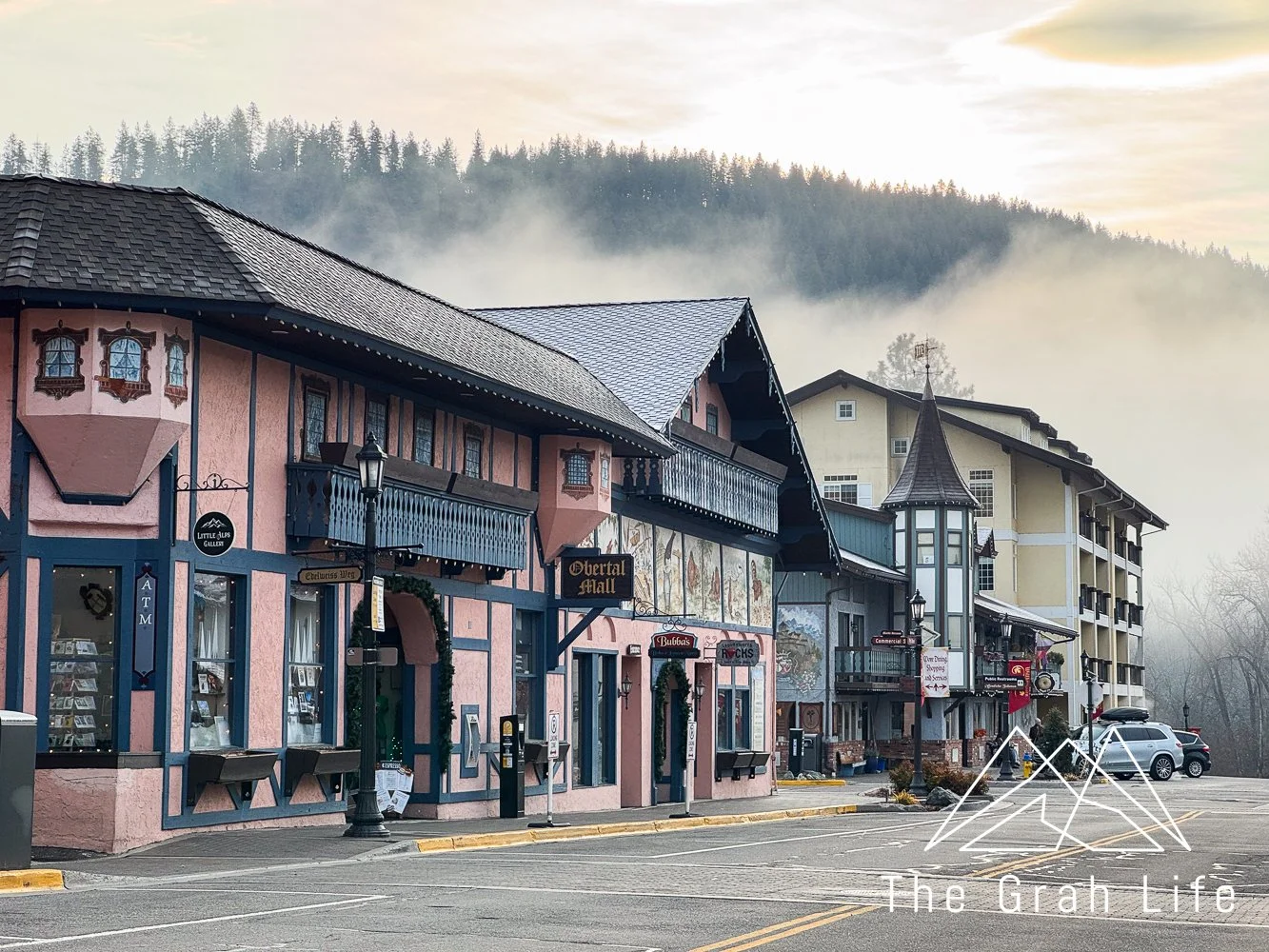
Lodging: Leavenworth
Day 2: Chelan
What this day involves:
River
Lake
Local activities
Optional hikes
Wineries
Lodging: Chelan

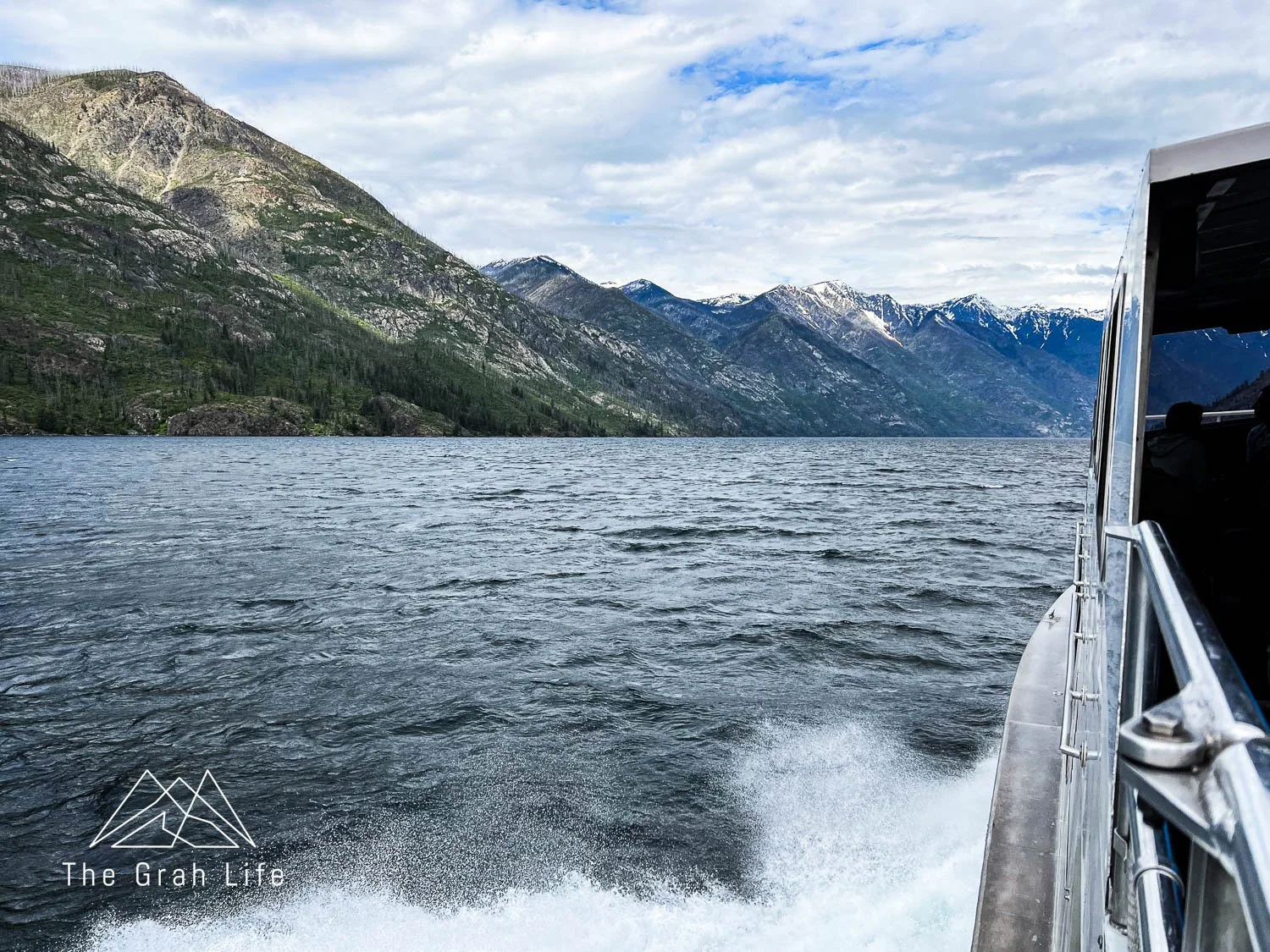
Day 3: Ferry to Stehekin
What this day involves:
Lake
Mountains
Boat ride
Unplugging
Relaxing
Lodging: Stehekin
Day 4: Stehekin
What this day involves:
Lake
Mountains
Waterfall
Biking
Local activities
Unplugging
Lodging: Stehekin

Day 5: Winthrop
What this day involves:
Boat ride
Mountains
River
Lodging: Winthrop

Day 6: North Cascades National Park
What this day involves:
Mountains
Lake
River
Optional hikes
Washington Pass
Diablo Lake
Lodging: Anacortes

Day 7: Anacortes to Seattle
What this day involves:
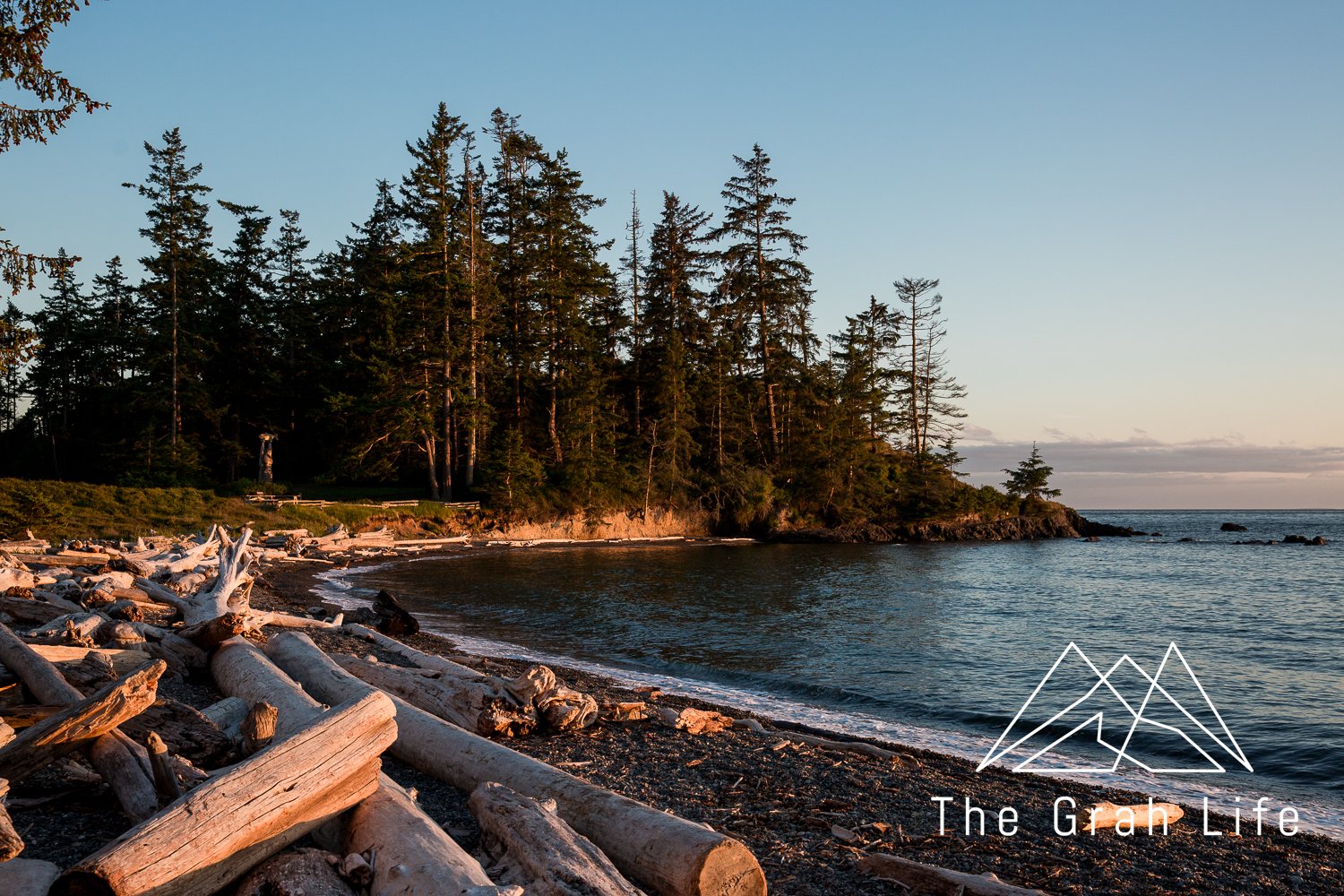
State Park
Beaches
Puget Sound
Ferry
Meadows
WWII Forts
Leave no trace
North Cascades National Park has a fragile alpine ecosystem. Please follow the Leave No Trace principles to help protect it.
Stay on designated trails to avoid trampling wildflower meadows. Do not cut switchbacks, which can cause erosion and damage the landscape.

What to pack
Weather changes quickly in the North Cascades. Bring extra layers along with plenty of water and snacks.
There are no concessions inside the park, so plan to bring everything you need for the day. You can find our full Pacific Northwest packing list here, plus our favorite hiking gear here.
Park tips
Gas stations
There aren’t any gas or charging stations between Marblemount and Winthrop. Fill up before heading into the park.
Bathrooms
You’ll find bathrooms at trailheads, campgrounds, and the Diablo Lake and Washington Pass Overlooks.
Restaurants
There aren’t any restaurants or shops inside the North Cascades National Park. Plan accordingly and bring food and water with you.
Cell service
There is no cell service throughout the North Cascades National Park. Load directions before leaving your lodging.
Parking
Parking at popular trailheads fills up quickly. Plan to arrive early – before 7 a.m., or late – after 4 p.m. to get parking throughout the summer months. Larch season draws large crowds. Arrive before 6 a.m. and don’t expect to find parking within a mile of hikes after 7 a.m.
Where to next?
Road Trip all three of Washington’s National Parks
Check out this itinerary for the most efficient and scenic route to see the North Cascades, Olympics, and Mount Rainier.
Mount Baker
You’ll find the Mount Baker Wilderness Area just above the western side of the North Cascades. Visit for a scenic drive along the Mount Baker Highway or some of Washington’s most iconic trails – all described here.

Olympic National Park
Add a completely different landscape to your trip with Olympic National Park. Here, you’ll find temperate rainforests, lakes, and wild Pacific beaches. Check out our Olympic National Park itinerary to plan your visit.

San Juan Islands
Reserve a ferry in advance if you plan to visit the San Juan Islands, and book lodging early during peak season. While you’re there, consider taking a whale watching tour – it’s the best place for it in Washington.
Mount Rainier National Park
Mount Rainier is about a half-day drive from the North Cascades. Once there you’ll enjoy more stunning mountain views, wildflowers, and waterfalls. Grab our itinerary here to make the most of your trip.

Search the blog for more adventures! Try searching for topics such as “backpacking”, “waterfalls”, or “national parks”.