
Day Hiking Packing List: Our Favorite Gear
After nearly a decade of hiking, this list has our favorite gear from the must haves to the extra conveniences. It has everything you’ll need for incredible sunrise hikes to rainy days and everything in between.
If you’re new to hiking, focus on acquiring the ten essential and emergency items first, then work your way to upgrading boots, clothing, and day packs to make your hikes more comfortable. Don’t be discouraged if you don’t have the latest clothing or gear either — we’ve seen experienced mountaineers backpack 20 miles in jeans and sandals because that’s what they like. Use and wear what works for you!
If you’re an experienced hiker, we’re sure there is gear on this list that you haven’t heard of or have always been curious about. Let our trials over the years guide your gear choices.
Know what you’re looking for? Click a link below to skip to a section.
Disclosure: This post includes affiliate links with recommended lodging recommendations and hiking gear. We’ll receive a small portion of that sale if you click through and reserve lodging or purchase a product. You won’t be charged more, and we haven’t been paid by any of these retailers to share their information. These are all our genuine preferences.
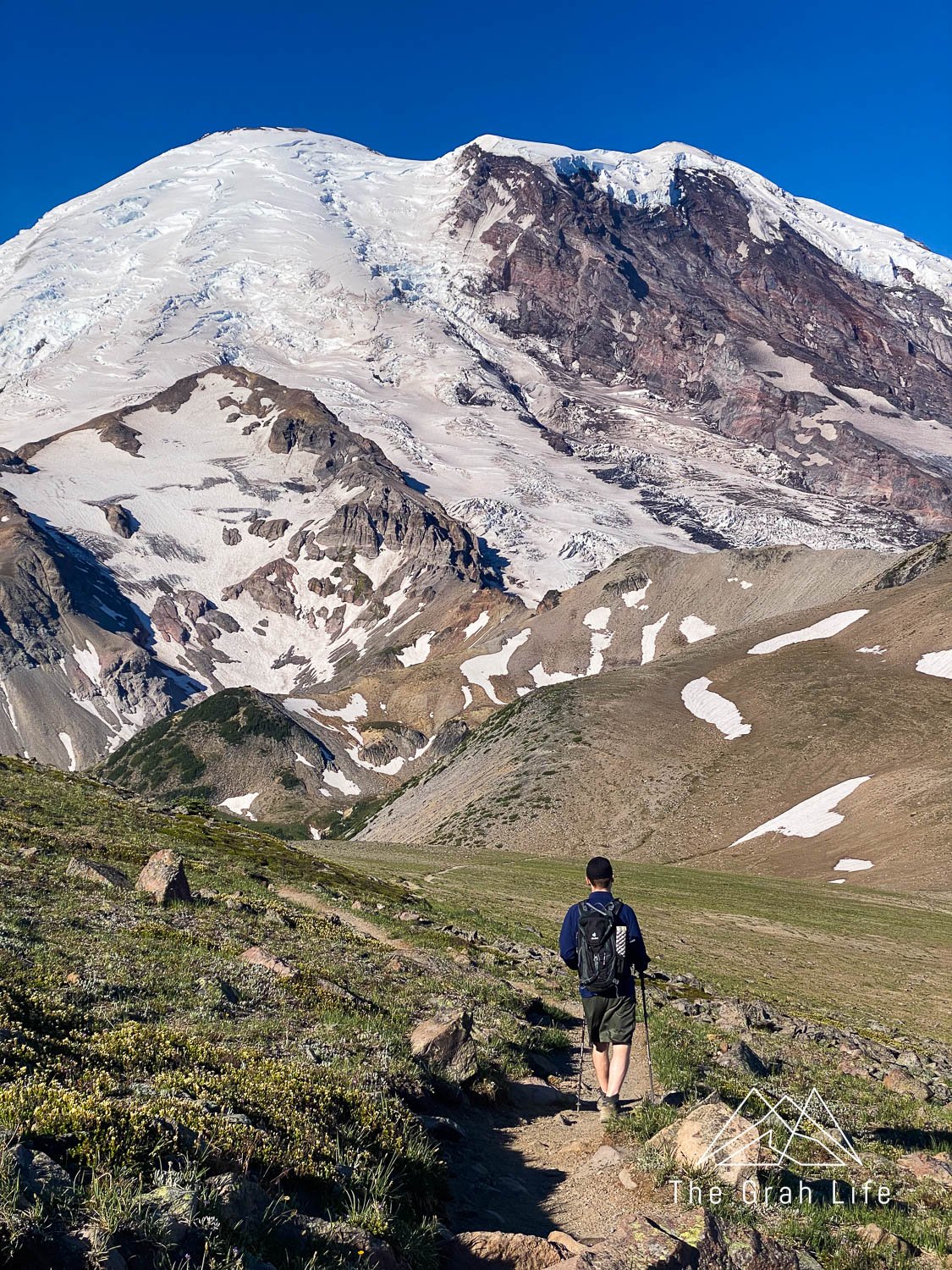
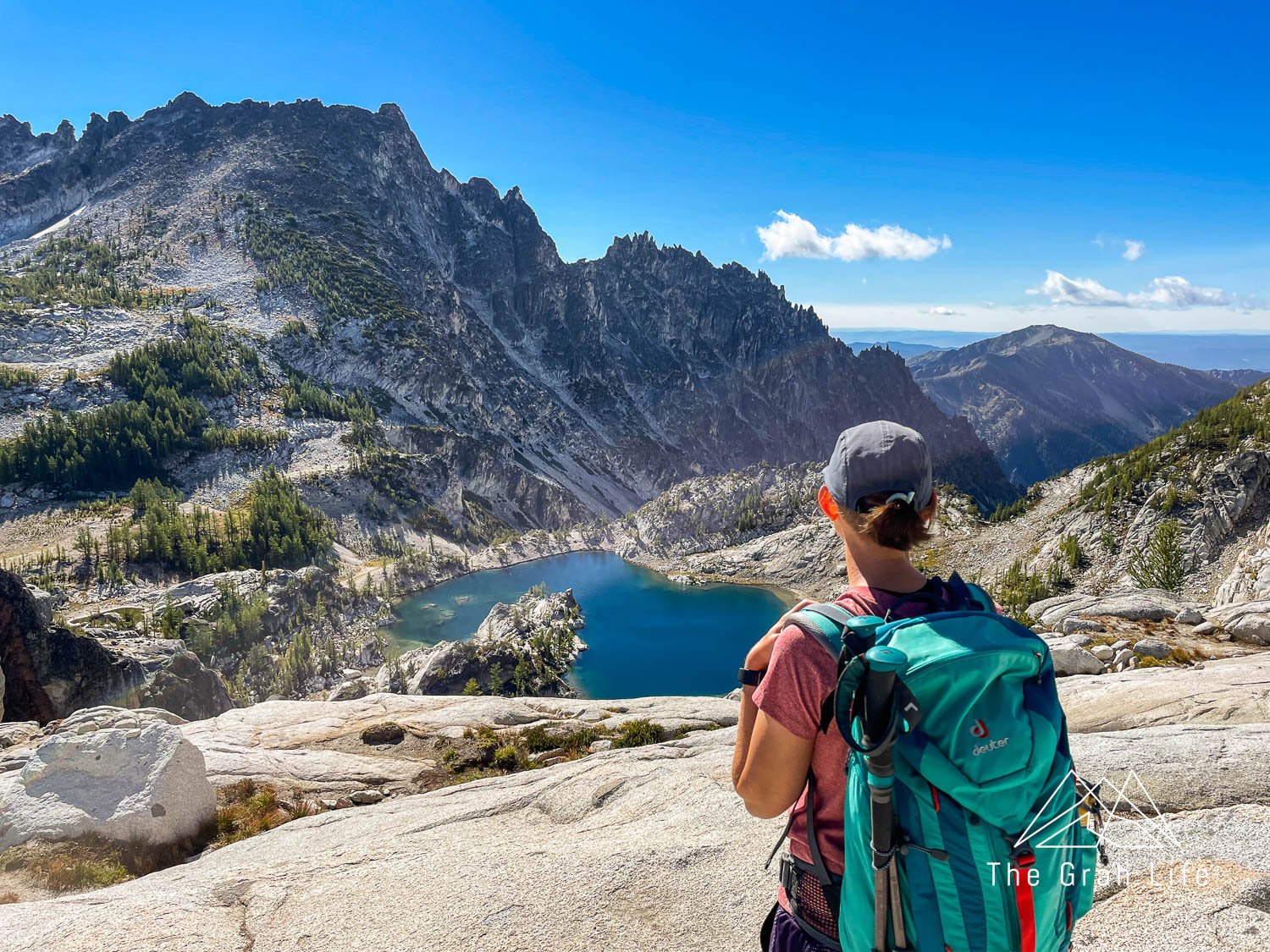
If you’ll be hiking up and down steep hills, trekking poles are a must. They’ll help disperse your weight, help to keep you from getting knee injuries and help you stay steady in variable terrain. We always have our poles on us!
Clothing
Footwear
You’re going to want waterproof boots — ones that can handle walking through shallow streams, stepping in puddles, hiking in the rain, and even on snow.
Unless you’re purchasing traditional leather boots, you shouldn’t have to “break in” your boots for them to feel great. Of course, you should wear them for a couple shorter hikes to figure out if they are right for you and how tying them will work best (check out this article on ways to tie boots to minimize hot points), but they should generally feel great from the get go.
Wool hiking socks (men’s/women’s)
A good pair of hiking socks will prevent blisters!
Meghann loves these because they help keep pine needles out of your boots! She wears them year-round, although they aren’t water resistant and do get wet in snow.

Clothing
Moisture-wicking T-shirt (men’s/women’s) or sun shirt (men’s/women’s)
Moisture-wicking pants (men’s/women’s) or shorts (men’s/women’s)
We always pack layers that are easily taken on and off and don’t take up much space in our bags. They’re great for keeping warm on cooler days, sunrise hikes, or when you stop for a break.
These wool undergarments are odor-resistant and temperature-regulating. Choose longer briefs to help prevent chafing.
This Smartwool bra is odor-resistant and temperature-regulating.

Outerwear
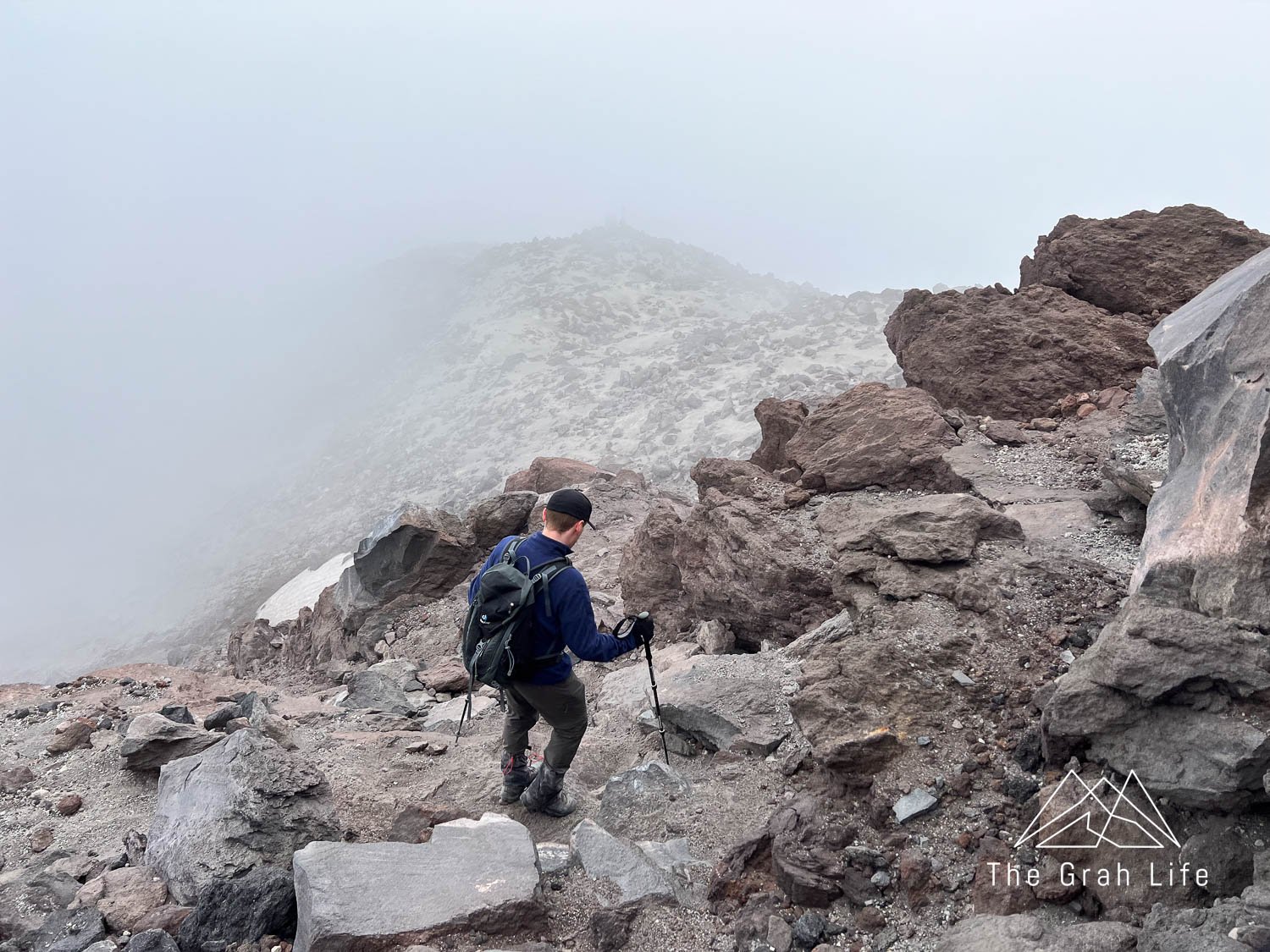
When hiking in the Pacific Northwest, it’s wise to always pack a raincoat (also known as a hard shell) no matter the season. They work as great windbreakers on summits during the summer and, of course, help to keep you dry in planned or surprise showers.
Look for raincoats with pit zips — arm pit zippers or vents — to help moderate your temperature.
No raincoat is completely waterproof, so don’t get caught up in the lingo. Purchase a water resistant/waterproof coat from a reputable brand and you should be good!
Pro tip: Do not wash your waterproof gear like other laundry. Use this two-step Nikwax detergent instead and your gear will last much longer.
Ponchos work well in a pinch too

Ten essentials
These items are necessities and could be responsible for saving your life. Don’t skimp here!
Emergency shelter
Emergency bivys are surprisingly cheap, effective, light, and hardly take up space.
We have the blanket style because we like their versatility (they come in a sleeping bag style as well). They can be used to create shelter, used as a blanket, or ground cover.
We’re carrying three in our emergency kit. Two to be used as blankets and one to be used as an emergency bivy.
This size of kit is for two people for one to four-day outings.
Remember to bring backupbatteries.
We carry a Sharpie with us in case of snake, tick, scorpion, or other bites.
In the event of a bite, circle the border of the swelling and write down the time to help emergency personnel assess the severity of your bite.
Map
Check out this video to learn how to use this
When we got serious about backpacking, we invested in this personal locator beacon. It gives us peace of mind with the ability to set waypoints, text others when there is no cell service, and use the S.O.S button for emergencies.
There is a monthly subscription fee.
We recommend slipping a few of these in your bag throughout wildfire season.
Personal medication
Personal supplies
Band-aids and blister care
You’ll want to have a good stash of band-aids and blister care, especially if you plan on day hiking to Beaver Falls. Walking through the river, sand, and gravel is very tough on your feet. Pack more of these items than you’ll think you’ll need.
We like to put a band-aid over blisters, then Luekotape on top of the bandaid to keep it in place.
This repellent by Plant Therapy has been just as effective as Deet at repelling mosquitoes for us.
This sunscreen has the safest product rating for sunscreen on the EWG’s Skin Deep guide.
Grab a lip balm that has sunscreen!
Prevents chaffing

Bathroom supplies
You’re responsible for disposing of waste properly, and rules can differ based on the environment or the amount of traffic a trail gets. When allowed, dig a cat hole 6-8 inches deep and at least 200 steps away from water sources for solid waste. Always pack out toilet paper. When cat holes aren’t allowed, use wag bags instead.
Toilet paper (pack this out if it’s not going in a pit toilet) or a pee cloth
Gallon Ziploc bags for garbage
These are needed for when digging cat holes for waste is not allowed.
This is a game-changer for the women/trans/non-binary folk!! It allows you to go pee standing up. Since you only have to unzip and point the direction you want to let things flow, it’s so much more private than pulling down your pants and squatting.

Food and water
We tend to pack peanut butter and jelly sandwiches along with plenty of snacks like these:
Lara Bars (gluten-free)
Luna Bars (gluten-free)
Trail mix (gluten-free)
Jerky (gluten-free)
Beef sticks (gluten-free)
Pizza parmesan crisps (gluten-free)
Dried fruit, like mango, apricots, or apple chips (gluten-free)
Bolt Energy Chews (gluten-free)
On average, it’s suggested to pack one liter of water for every two hours you’ll be hiking, but we tend to err on the side of caution and pack a bit more, especially on hot days.
We love the Hydrapak water bladders linked above. Since we always have water handy, it helps keep our water breaks quick and we end up staying more hydrated.
We’ve tried various brands of water bladders, and these ones are the easiest to clean since they flip inside out.

Seasonal gear:
Hot weather
Long sleeve quick dry sun shirts (men’s/women’s)
Neutrogena Ultra Sheer Sunscreen
This sunscreen has the safest product rating for sunscreen on the EWG’s Skin Deep guide.
Electrolytes
You always need to replace salts and electrolytes you sweat out, and this is especially hard to do just by eating snacks and drinking water alone on hot days, so we supplement with these salt pills (caffeinated/uncaffeinated) or Nuun tablets to put in water (caffeinated/uncaffeinated).
These are nice to have if it’s dusty.
Trekking sandals (men’s/women’s)
Great for water crossings and swimming!
One of these towels dries both of us off.


Choose the length of snowshoes that will accommodate your weight, including pack weight.
These MSR snowshoes have sharp, jagged edges that allow you to walk on slopes without slipping. There are cheaper, plastic snowshoes have slippery tubes on their edges instead – avoid these!
These snowshoes have heel lifts on the back to make walking up hills a breeze.
Mosquitos and ticks
Pre-treat clothing with permethrin.
These are stretchy rubber bracelts and they work well. Wear them around your wrists and socks and you’ll notice mosquitos keeping their distance. Unfortunately, they are a one-time-use item, and the citronella smell wears off after a few hours.
These work okay. We found them to be most useful when put on the underside of our sun hats to keep bugs off our faces and necks when the bugs weren’t bad enough to warrant wearing a bug net, but still annoying.
Mesh head net or mesh net suit
These work best with sun hats
The best way to avoid ticks is to wear long pants, stay on trails, and avoid brushing up against brush.

Sunrise and sunset hikes
Along with any seasonal gear and the ten essentials, you’ll want extra layers for any sunrise or sunset hike. Temperatures drop quickly after the sun sets, and mornings can take a long time to warm up. These are the items we always ensure we have on hand for these hikes:
Packable puffy coat (men’s/women’s)
Remember to bring backupbatteries.
Hot drink
If we’re feeling fancy, we’ll bring hot coco to help us stay warm.
Use a Thermos to transport hot liquid or warm up water with a Jetboil.
Don’t forget to bring along lightweight mugs.
We aren’t coffee drinkers but Meghann’s parents love this French Press Jetboil accessory.




Search the blog for more adventures! Try searching for topics such as “camping”, “waterfalls”, or “Washington”.