
Hanoi Travel Guide: Everything You Should Know
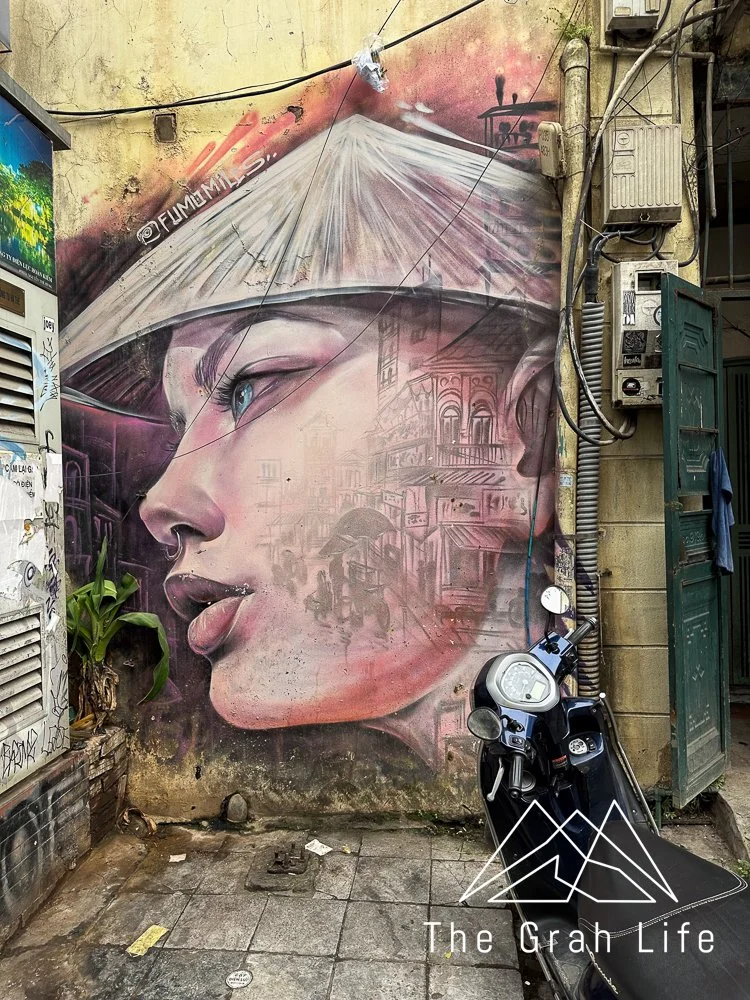
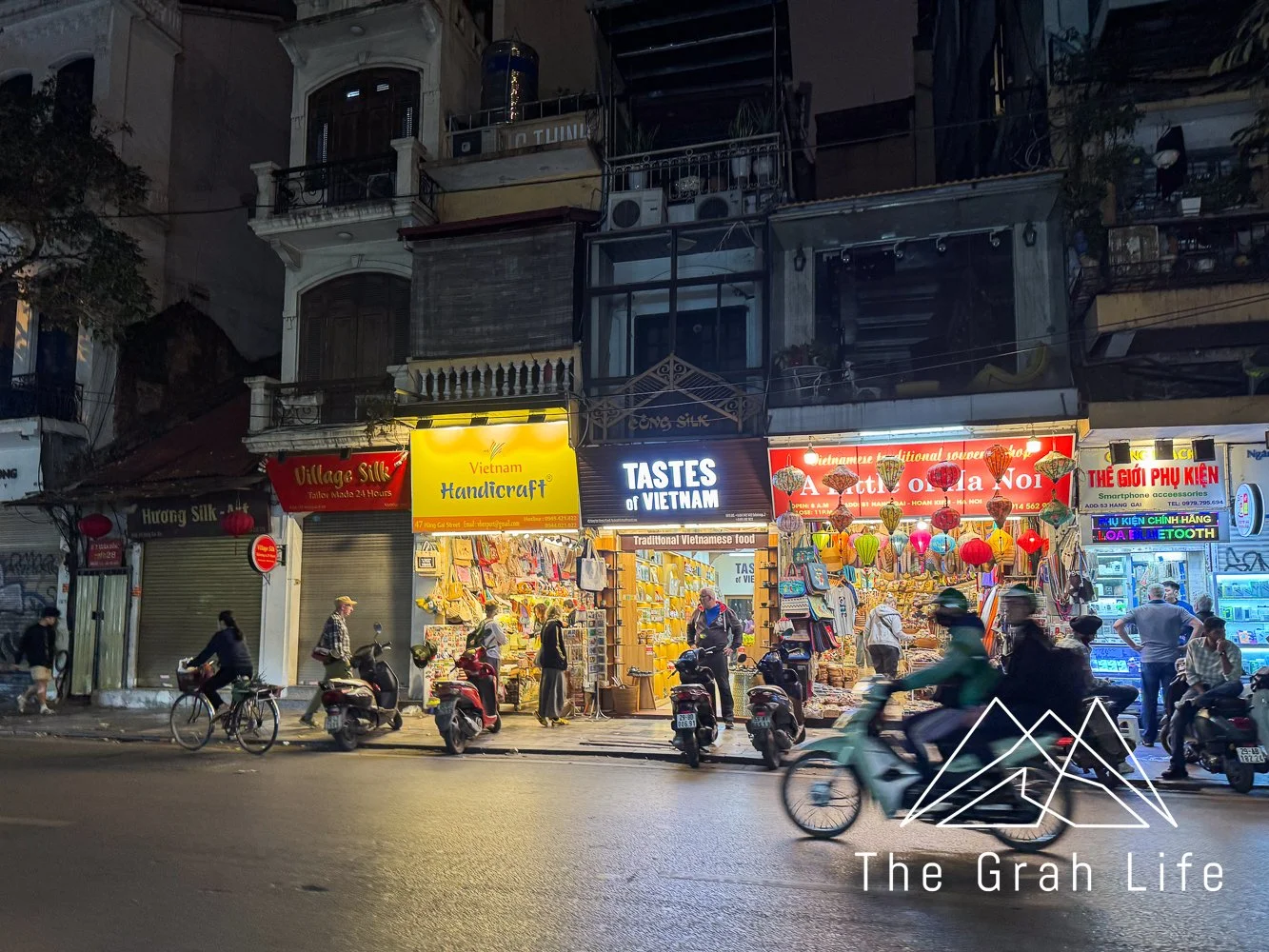
Hanoi is a city of contrasts. The streets buzz with motorbikes, vendors, and daily life, but step off the main road and you’ll find quiet cafes, peaceful lakes, and tree-lined parks. Ancient temples and French colonial buildings sit alongside modern shops and colorful street art. It’s fast-paced, but charming; energetic, but grounded in tradition – making it one of Vietnam’s most fascinating cities to explore.
Where is Hanoi?
Hanoi is the capital of Vietnam, located in the northern part of the country along the Red River. It’s known for its centuries-old architecture, street food, and cultural sites like the Old Quarter. It’s fast-paced, but charming, with a population similar to the size of New York City.
Getting to Hanoi
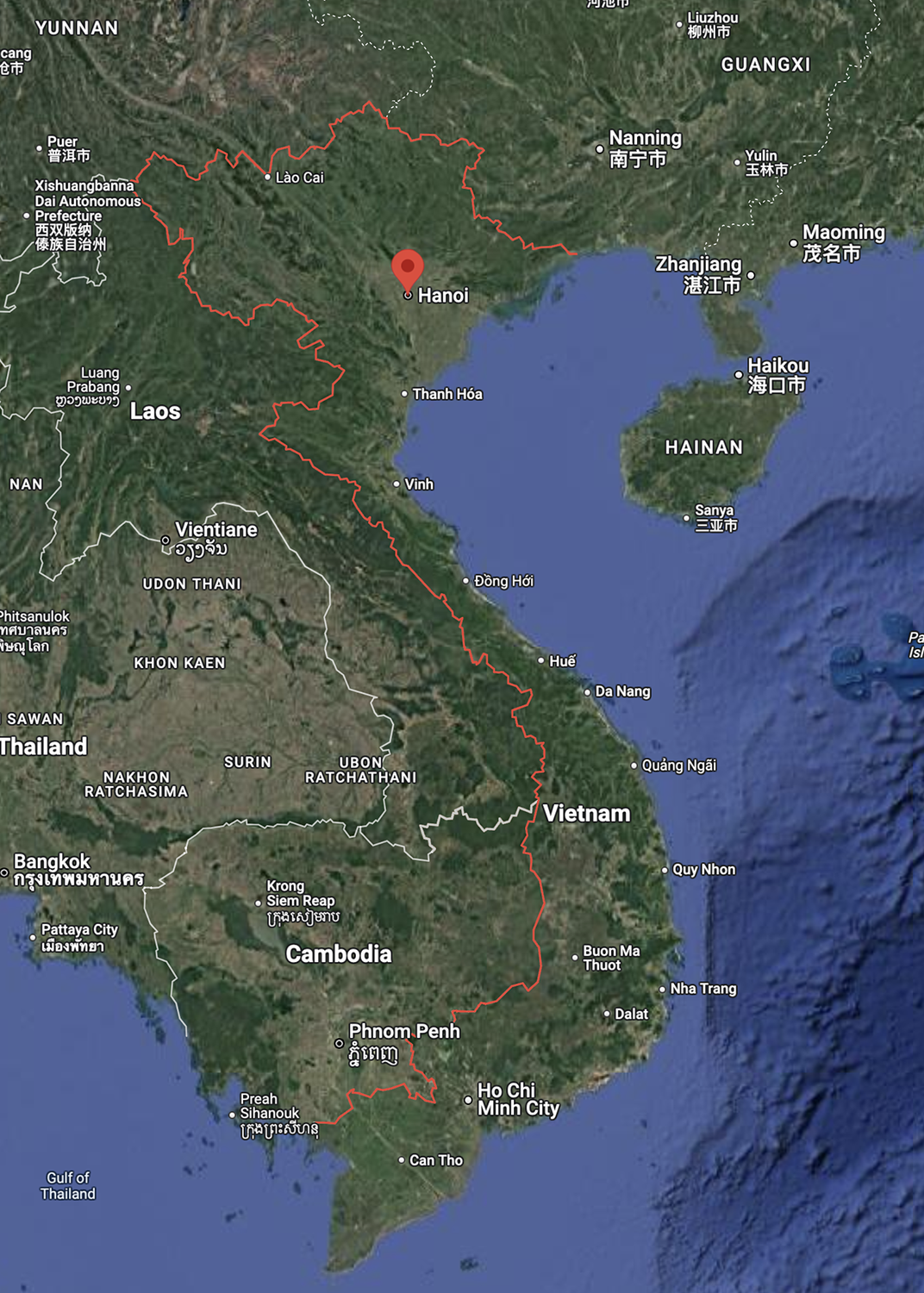
Hanoi is a major travel hub in Southeast Asia, with easy access via international flights and domestic routes from cities like Ho Chi Minh City, Da Nang, Hue, and Dong Hoi.
From Nội Bài International Airport (HAN), it’s about a 35 km Grab ride to the city center. Hanoi is also well connected by train, and with the main station located downtown, it is a convenient option for travelers arriving from other parts of Vietnam.
When to visit
Spring
March – April
Spring is one of the best times to visit Hanoi. The weather is mild, with average temperatures between 18°C and 25°C (64°F-77°F). Flowers begin to bloom in mid-March, and although there can be some light rain, it’s nothing that should disrupt plans.

Summer
May – August
Summer in Hanoi is hot and humid, with temperatures often reaching over 35°C (95°F). Expect frequent afternoon rainstorms and high humidity. Explore early in the day and enjoy cooler evenings. If you don’t mind the heat, take advantage of this lull in the tourism season.
Autumn
September – November
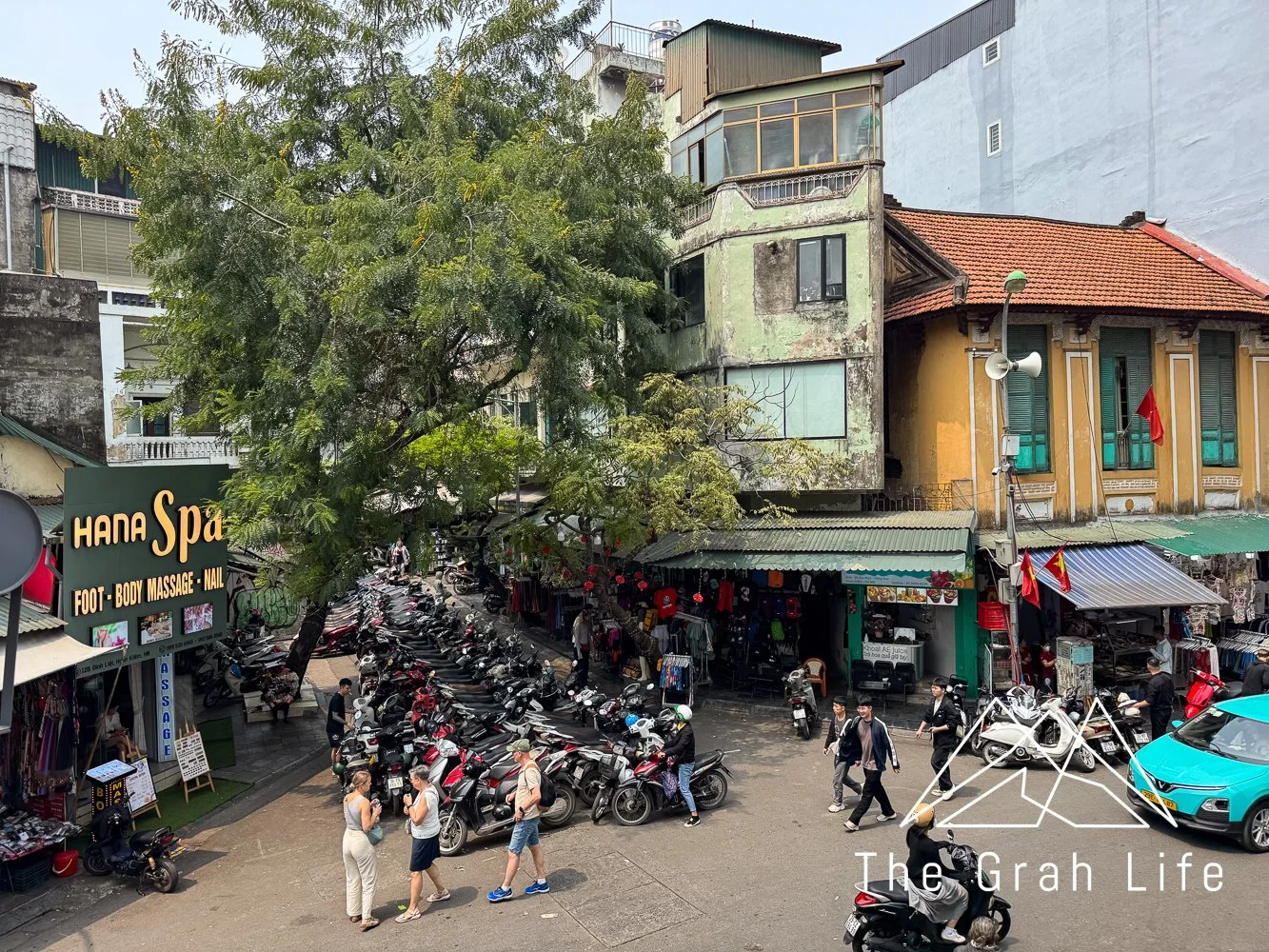
Fall is another ideal season to explore Hanoi. The temperatures drop slightly, ranging from 20°C to 28°C (68°F-82°F), and the rains begin to taper off. You can expect clearer skies and crisp air, making it ideal for outdoor activities.
Winter
December – February
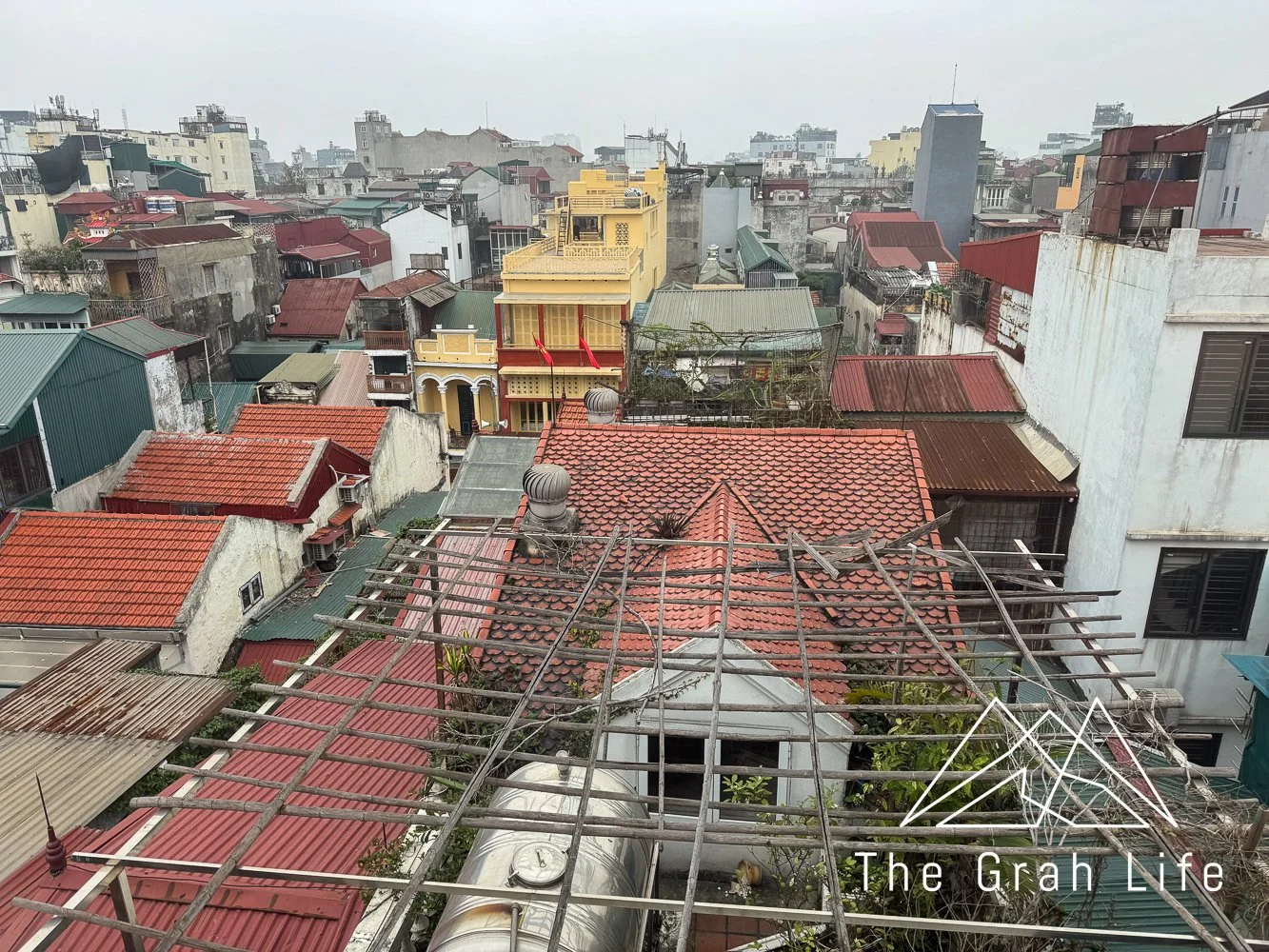
Hanoi winters are cool and overcast, with temperatures ranging from 10°C to 20°C (50°F-68°F). It rarely rains, but the humidity makes it feel colder. While it’s not as scenic as other seasons, winter is still a good time to visit if you prefer cooler weather and fewer crowds.
How long to stay
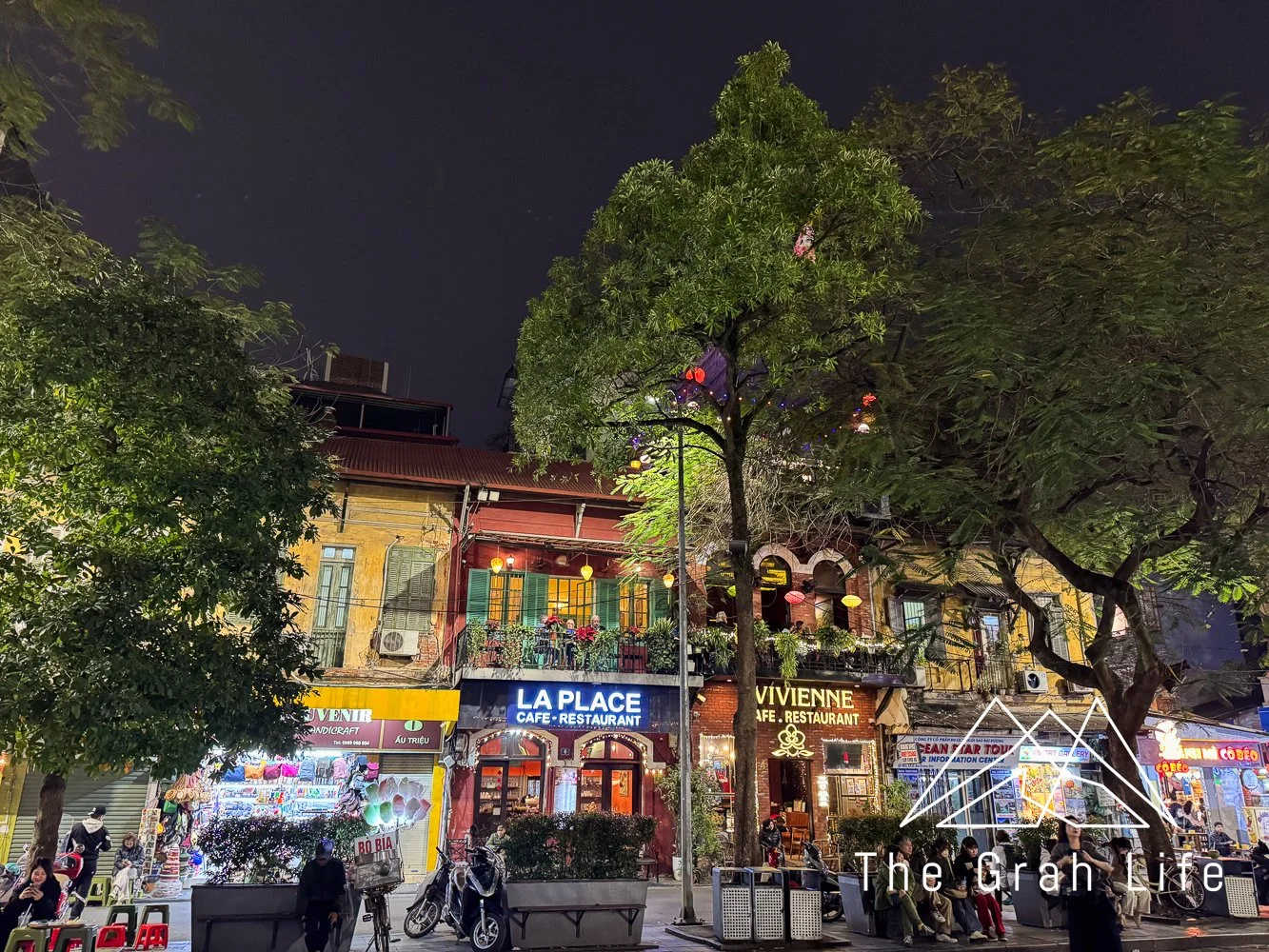
Two to three days in Hanoi is ideal. This gives you enough time to explore the Old Quarter, cultural sites, museums, and get a feel for the street food scene.
Where to stay
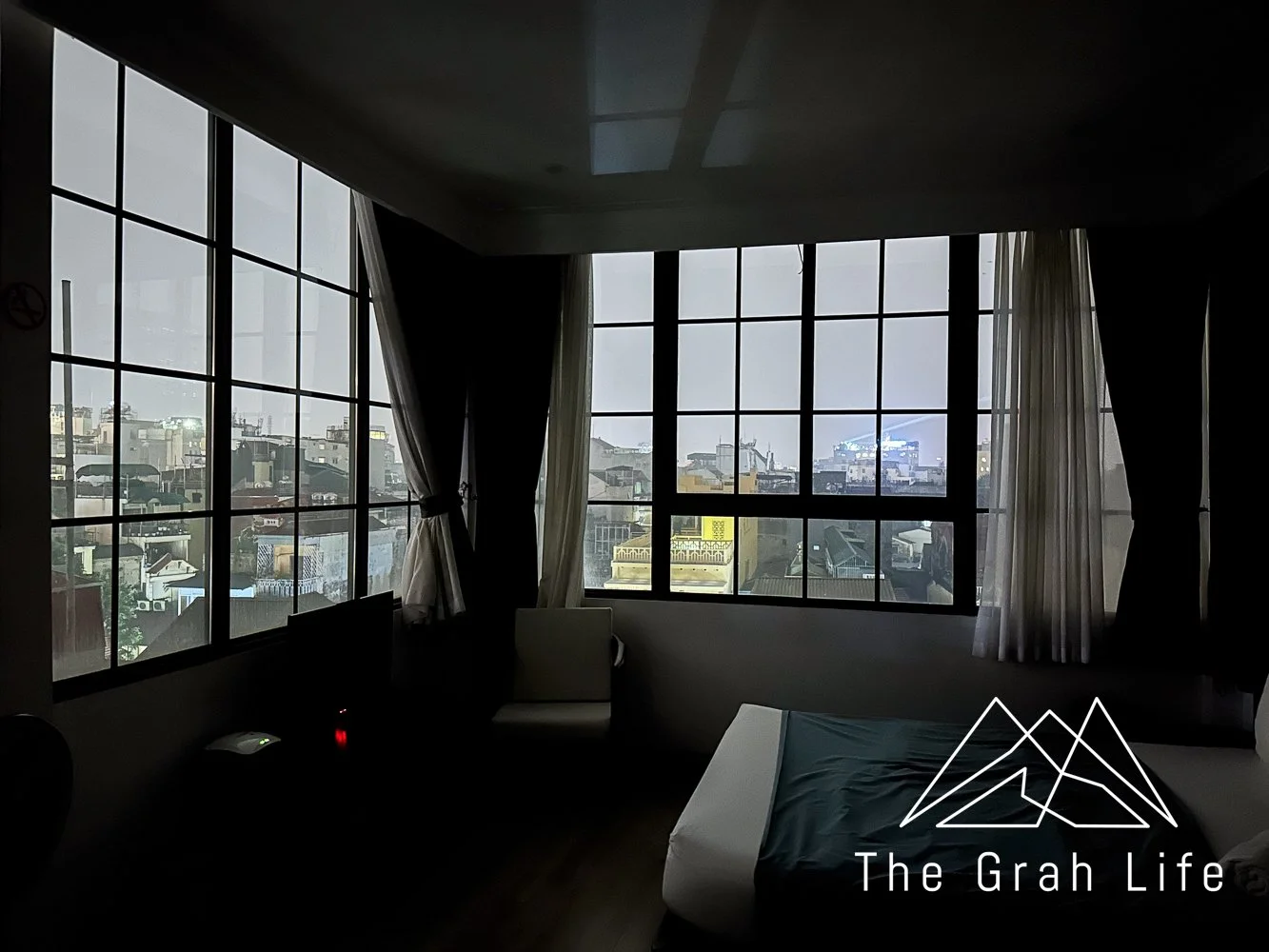
Hanoi has so many great neighborhoods and places to stay. We’ve got a blog outlining all the best lodging here.
Best activities
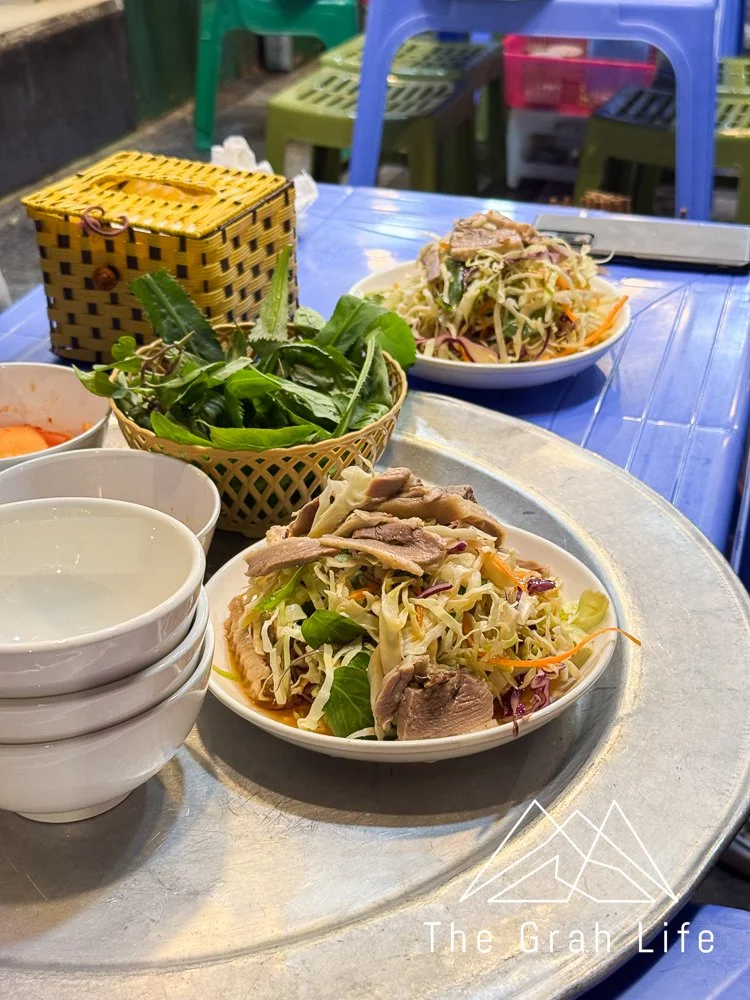
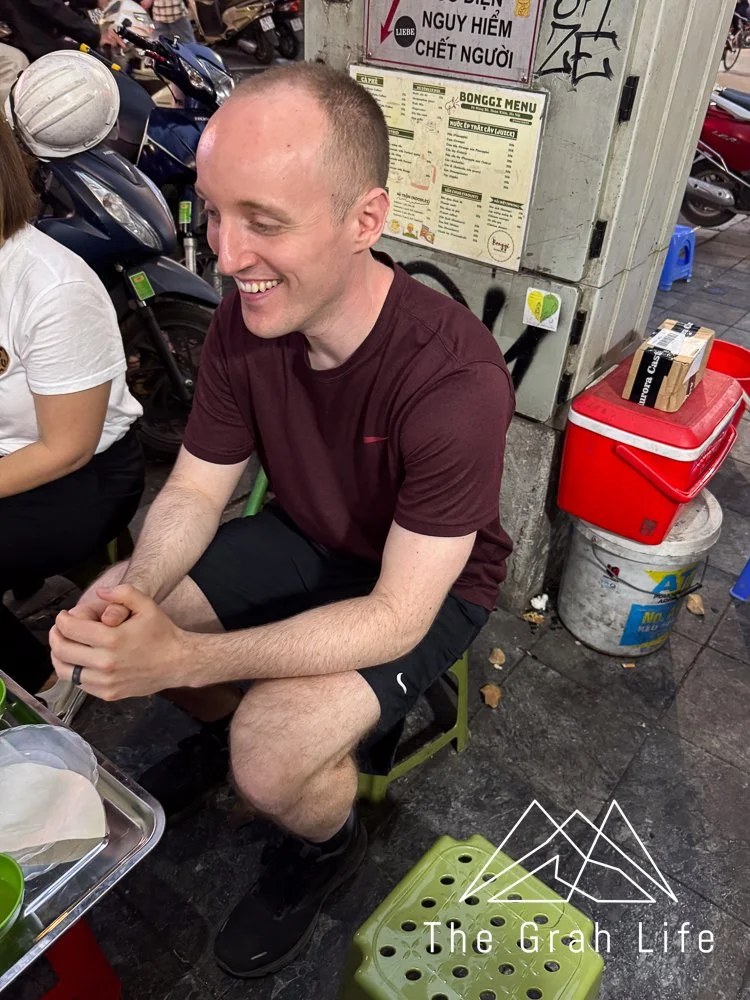
Street food tour
Doing a street food tour is a must in Hanoi! You’ll try dishes you won’t find on your own, and it will give you the confidence to keep eating adventurously throughout your whole trip.
We booked a food tour with Hoan, who expertly handled everyone’s allergies and requests. Find her food tour here and more information on what to look for when choosing what to eat in Vietnam here.
Water Puppet Show
Water puppetry is a unique traditional art form that began in Vietnam’s flooded rice fields. Villagers would entertain each other with puppet shows depicting daily life, festivals, and folklore.
Today, you can see these performances in Hanoi’s Old Quarter. For a guaranteed seat, buy tickets in advance to the Thang Long Water Puppet Theater, which features live music. If you’re feeling spontaneous, try the Lotus Water Puppet Theater for a more casual experience.
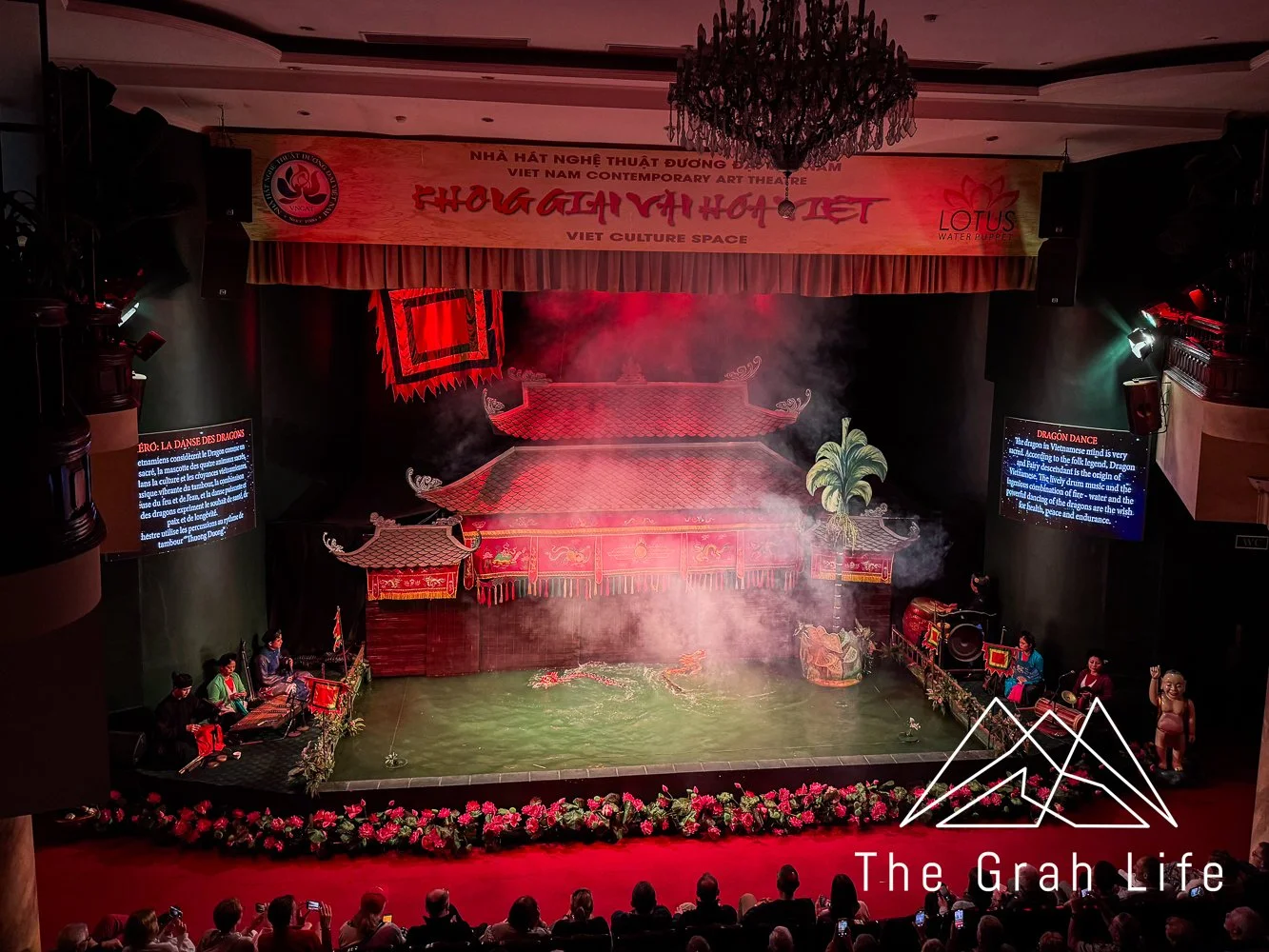
Lotus Water Puppet Show
Walk around Hoàn Kiếm Lake
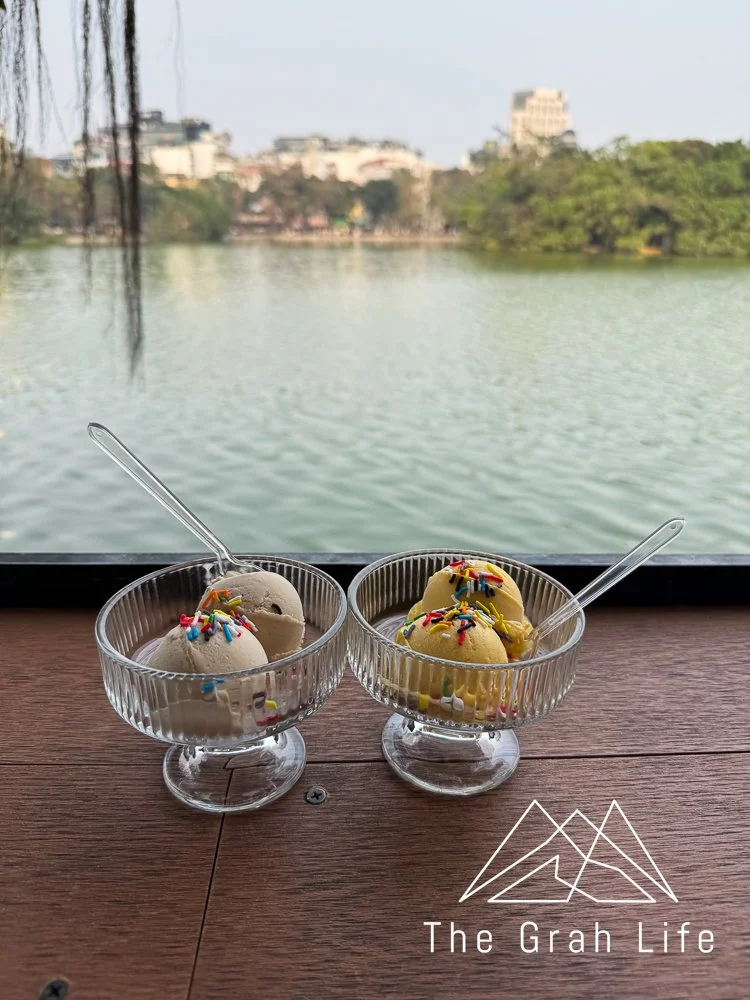
The loop around Hoàn Kiếm Lake is about 1.2 km and shaded, making it an easy walk any time of day. Along the way, you’ll find places to rest, locals practicing tai chi, street vendors selling snacks and trinkets, and plenty of photo ops of Turtle Tower. We especially enjoyed stopping for ice cream on the lake’s northwest side.
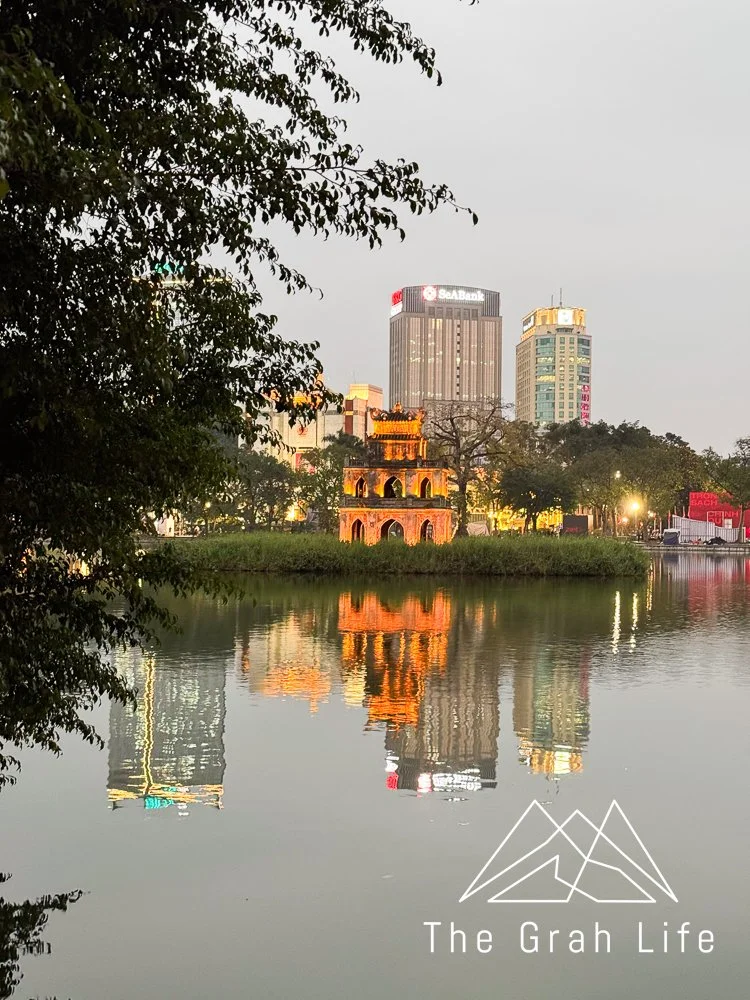
Ngọc Sơn Temple
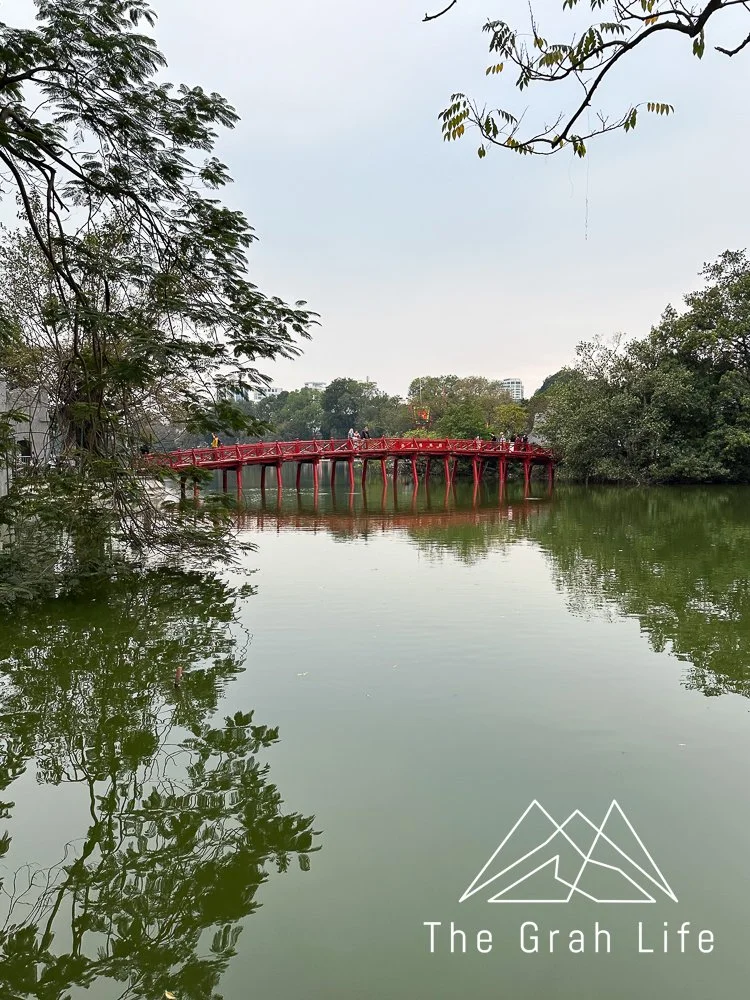
On the northeast side of Hoàn Kiếm Lake, you’ll see the Ngọc Sơn Temple. There’s a small entrance fee, and you must be dressed appropriately to enter.

Hoa Lu Prison
Hoa Lo Prison offers a sobering look at Vietnam’s history. The site served as a prison during French colonial rule and was later known as the “Hanoi Hilton” when it was used to hold American POWs during the Vietnam War. The museum presents an informative and thought-provoking view of Vietnam’s struggles for independence and the impact of conflict. Audio tours are available, but not necessary.
Explore the Old Quarter
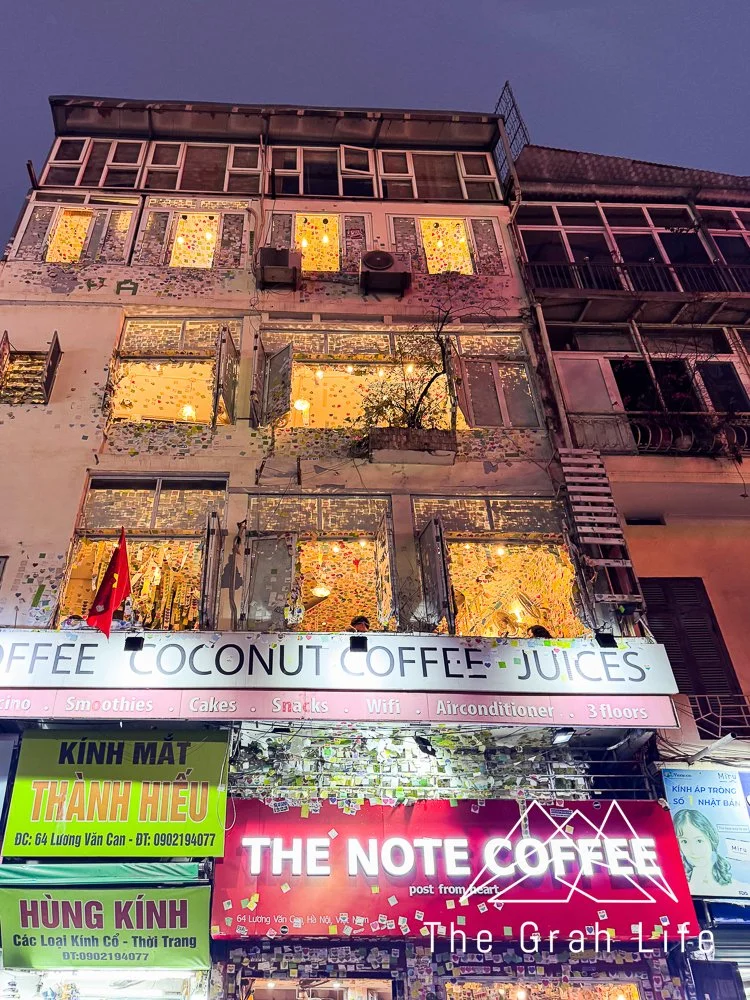
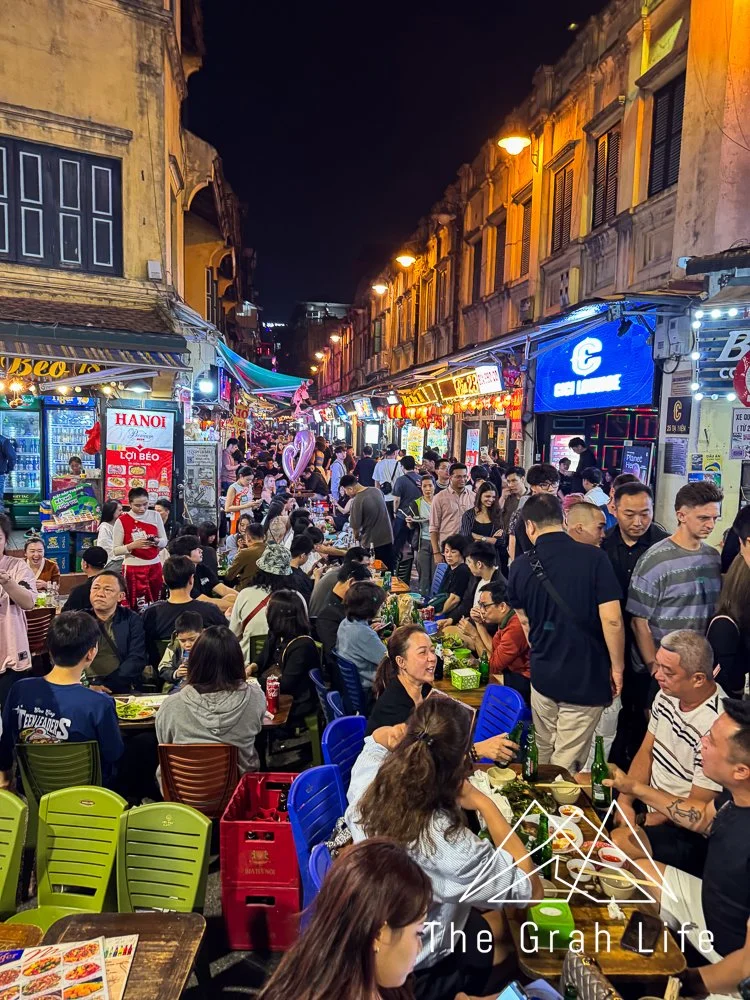
There is something for everyone in the Old Quarter. You’ll find plenty of shopping, cafes, massage parlors, and souvenirs throughout. Taking a walk past Beer Street in the evening is a must, and if you’re in the mood to enjoy great food and people watch, head to the balcony at the MET Vietnamese Restaurant, here, in front of the Buffalo Hostel.
The Note Coffee
Beer Street
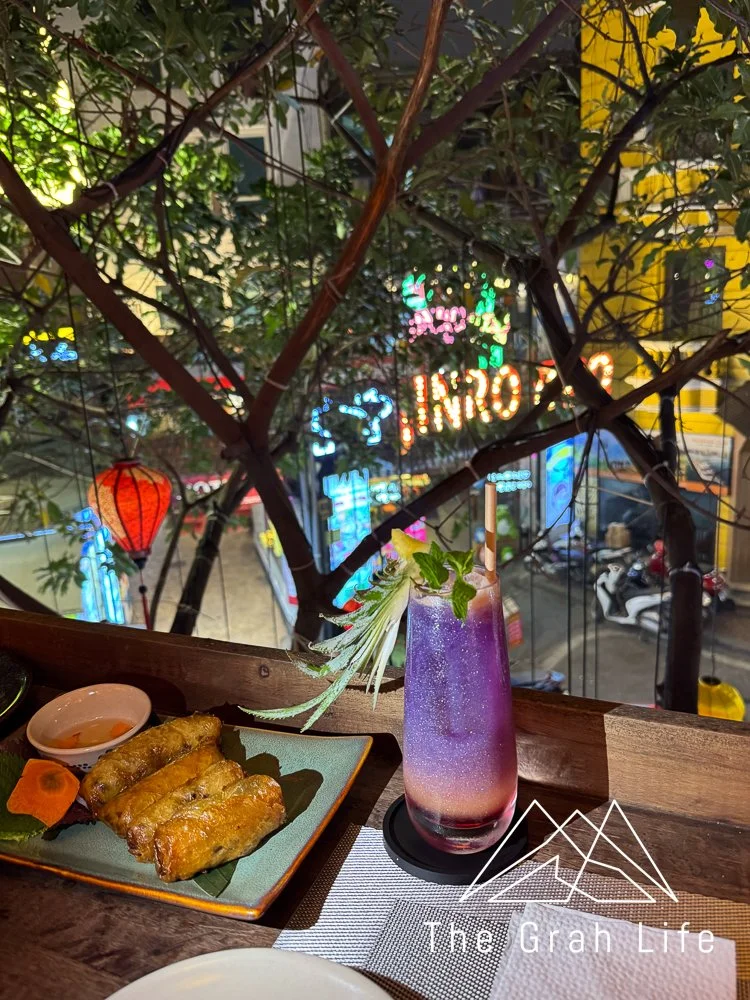
The MET
Local markets
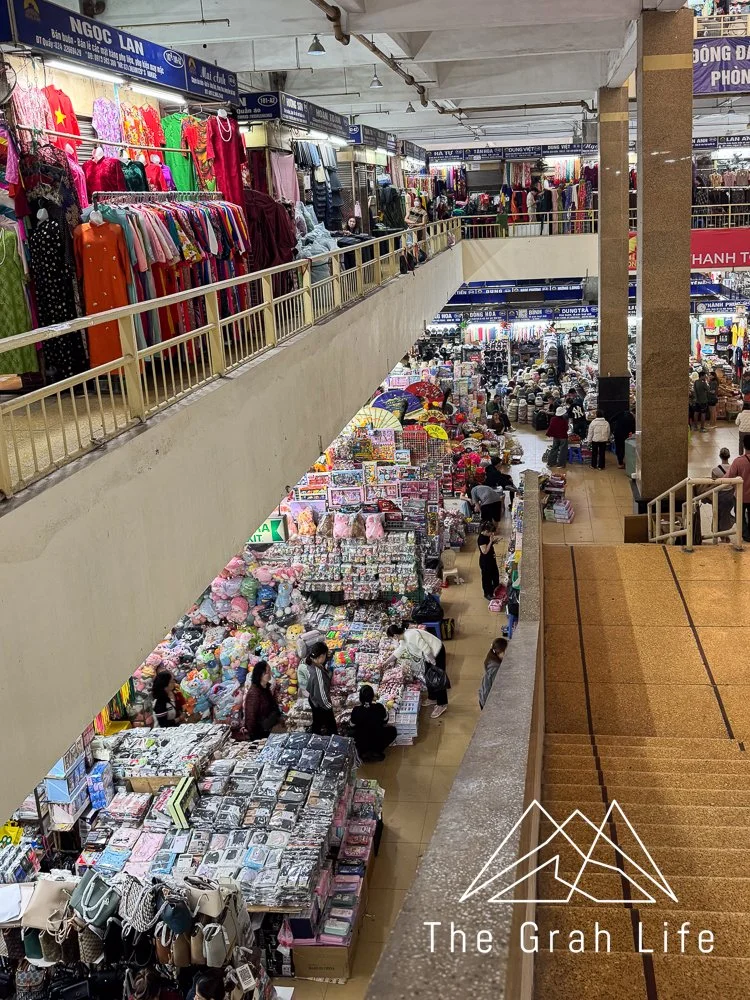
Seek out local markets for great food, souvenirs, and a look at daily life. In the Old Quarter, visit the Night Market on weekend evenings, the indoor Dong Xuan Market for clothes and gifts, or Hang Da Market for fresh produce and local snacks.

Train Street
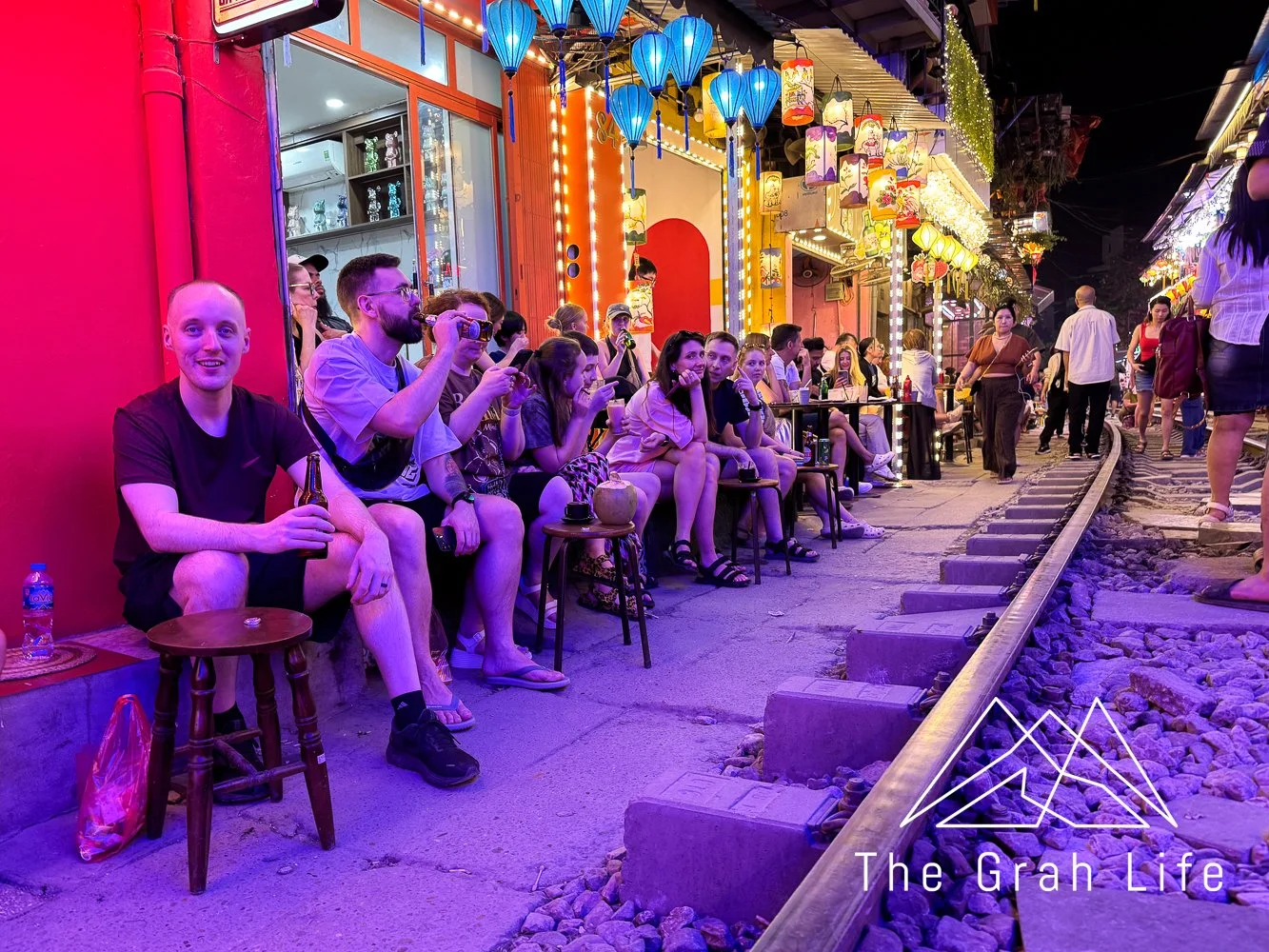
Train Street is one of Hanoi’s most famous and touristy attractions. Located in the Old Quarter, this narrow street is lined with cafes next to an active train track. Take a seat, order a drink, and wait for the train to rush by. Schedules vary, but the train usually comes through around 3:30 pm and 7:30 pm. Arrive 40 minutes early to get a good seat. Visit in the evening to see the street lit up with colorful lights, or in the morning for a quieter experience.
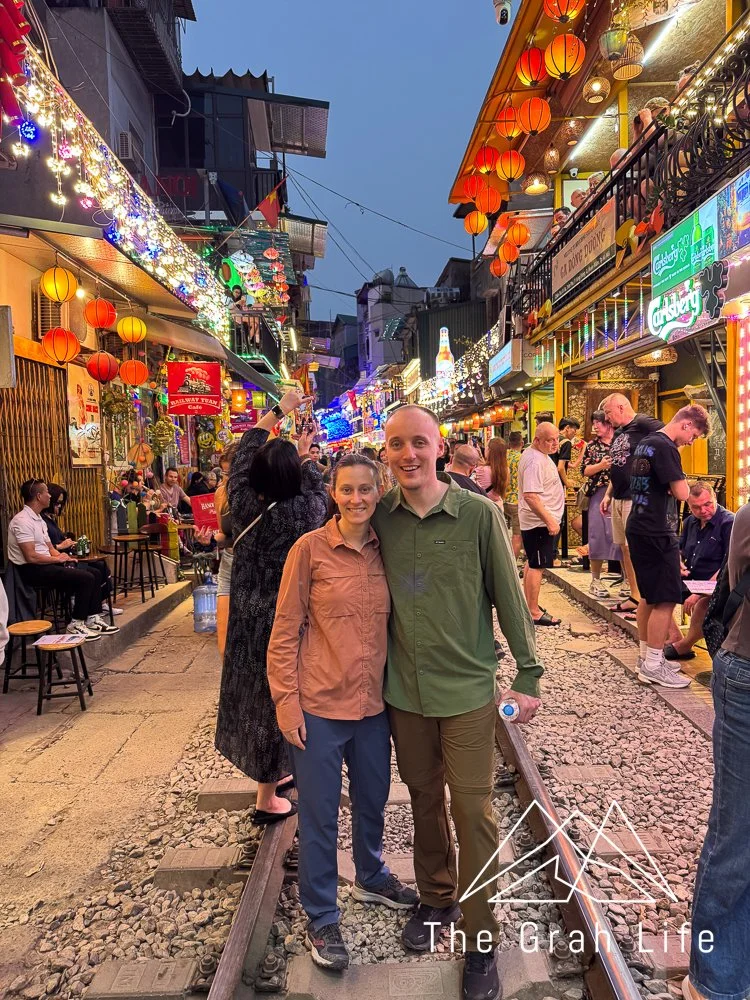
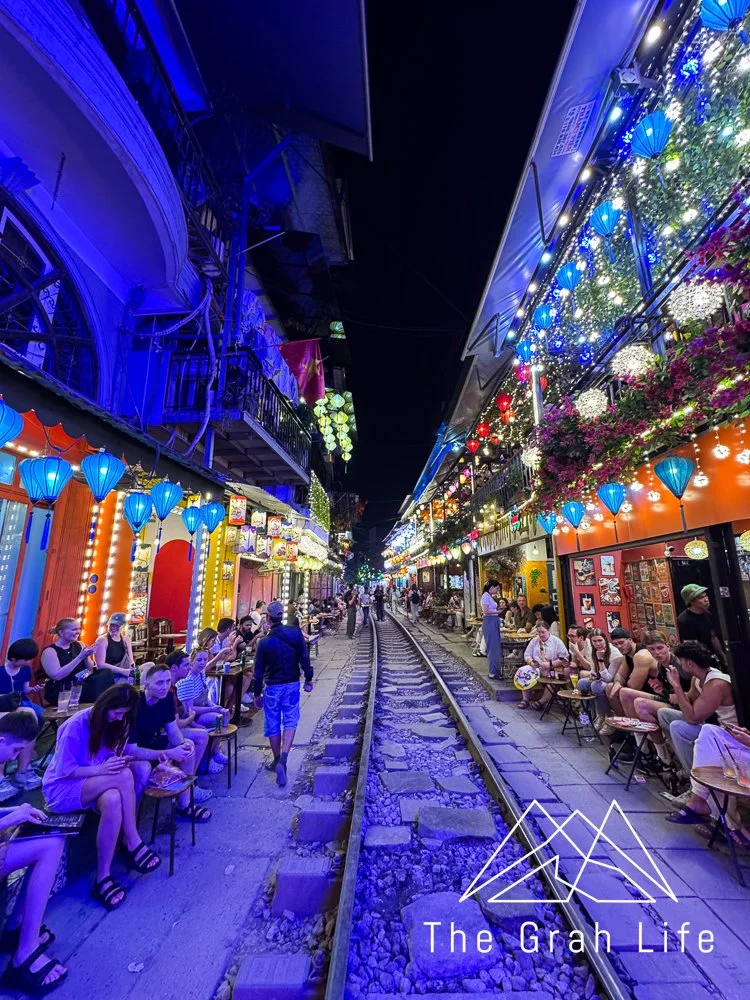
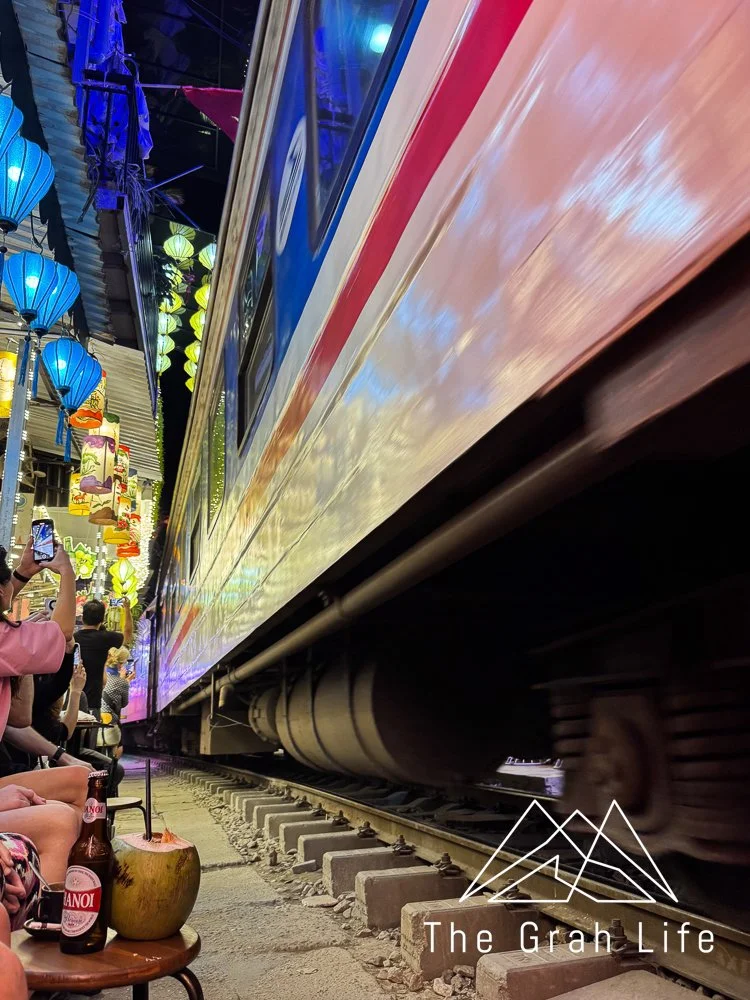
There are two spots to visit Train Street in Hanoi. The first is here, west of Hoàn Kiếm Lake. Since it’s within walking distance of the night life in the Old Quarter, it’s a busier spot. For a lesser known spot, check out Train Street near the intersection of P. Kham Thiên and D. Lê Duẩn streets, here.
Imperial Citadel of Thăng Long
The Imperial Citadel of Thăng Long is a UNESCO World Heritage Site and one of Hanoi’s most important historical landmarks. It served as the political center of Vietnam for over a thousand years, from the Ly Dynasty to the Nguyen Dynasty. Today, visitors can explore the ancient foundations, the flag tower, and archaeological sites that reveal layers of Vietnamese history. The grounds are peaceful and spacious, offering a quiet escape from the city while still being in the heart of Hanoi.
West Lake
West Lake, also known as Hồ Tây, is the largest lake in Hanoi and a popular place to walk, bike, or relax by the water. The area has a mix of local cafes, upscale restaurants, scenic viewpoints, and is popular with expats. On the eastern shore, you’ll find Tran Quoc Pagoda, the oldest Buddhist temple in Hanoi.
What to pack
Check out this blog for everything you should pack for a trip to Vietnam, no matter the season.
Where to go next
Hạ Long Bay
Taking an overnight cruise on Hạ Long Bay should be on everyone’s bucket list. It’s about 2.5 to 3 hours from Hanoi, and once you arrive, you’ll be stunned by emerald waters and towering limestone islands.

Ninh Bình
About 60 km from Hanoi, Ninh Bình is known as the “Hạ Long Bay of the land”. It quickly stole our hearts with its peaceful scenery and variety of activities. Visit for historic temples, hiking, and relaxing patios overlooking rice fields.

Sapa
Take an overnight bus or train to Sapa to see Vietnam’s iconic terraced rice fields. It’s a great place for trekking and cultural experiences. If you’re up for an adventure, look into the Hà Giang Loop.
Head south
Many travelers explore Vietnam from north to south. After Hanoi, head to Ninh Bình, then continue on to central destinations like Phong Nha, Huế, and Hội An before flying or taking the train to Ho Chi Minh City.






Search the blog for more adventures! Try searching for topics such as “backpacking”, “waterfalls”, or “national parks”.