
Hoi An Travel Guide: Exploring Vietnam’s Ancient Town
Once a bustling trading port from the 15th to 19th centuries, Hoi An is now famous for its well-preserved architecture and colorful lantern-lit streets. Recognized as a UNESCO World Heritage Site, the town blends history, culture, and natural beauty. Visit to wander the ancient town, relax on nearby beaches, or sample local delicacies while taking in the slower pace of life.

Where is Hoi An?
Hoi An is a picturesque town nestled along Vietnam's central coast, approximately 30 km south of Da Nang. It’s roughly a 1.5-hour flight from Ho Chi Minh City to Da Nang, followed by a 45 minute Grab ride from Da Nang to Hoi An.

Hai Van Pass with our driver
Getting to Hoi An
Hoi An doesn’t have its own airport, so most travelers fly into Da Nang International Airport from Ho Chi Minh City. Travelers coming from northern or central Vietnam can also reach Da Nang by domestic flight, train, or bus, then continue to Hoi An by taxi, Grab, or shuttle. The town is compact, making it easy to explore once you arrive.

When to visit
Spring
February – April
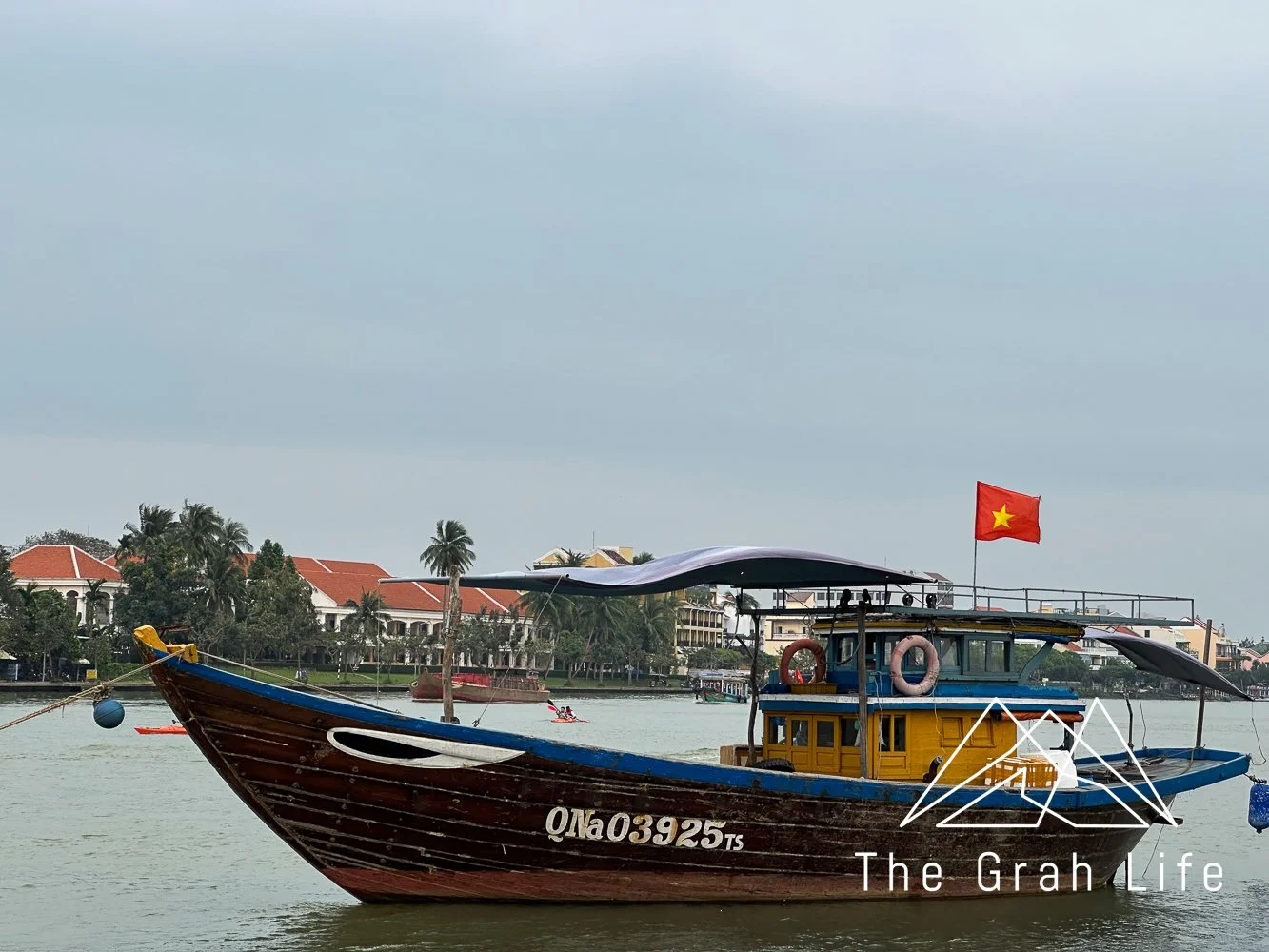
Spring is one of the best times to visit Hoi An. Temperatures are mild, ranging from 22°C to 28°C (72°F–82°F), and rainfall is low, with comfortable levels of humidity to walk around town or visit the nearby beaches.
Summer
May – August
Summer in Hoi An is hot and humid, with temperatures often climbing above 33°C (91°F). Afternoon and evening rain showers are common, and typhoon season peaks in August and September. If you visit during summer, plan indoor activities for the hottest parts of the day and check local forecasts for storms.
Autumn
September – November
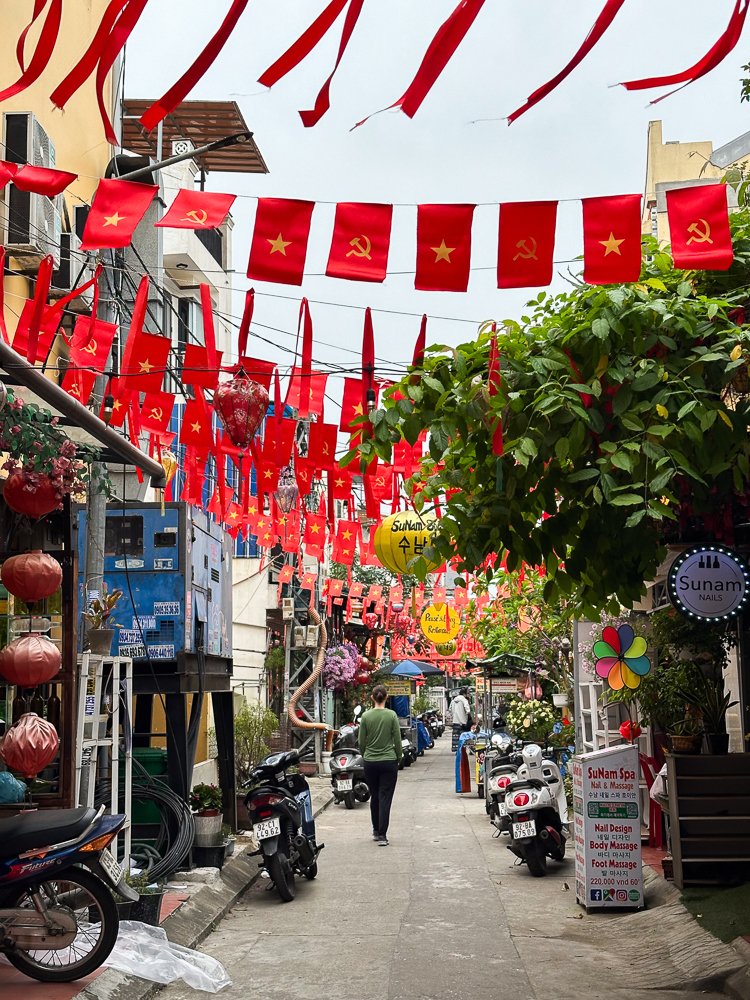
Autumn is generally pleasant, with temperatures between 25°C and 30°C (77°F–86°F). Early fall can still be wet, and typhoons may affect the area, but late October and November offer drier skies and cooler weather.
Winter
December – January
Winter brings cooler, drier weather, with temperatures from 18°C to 24°C (64°F–75°F). Humidity is lower, making it ideal for sightseeing and outdoor activities. This season also sees fewer tourists, so it’s a quieter time to experience the town.

How long to stay
Most travelers find that two to four days in Hoi An is enough to get a feel for the town and its atmosphere. The town is small, so plan on exploring nearby activities if you stay for more than two days.
Where to stay
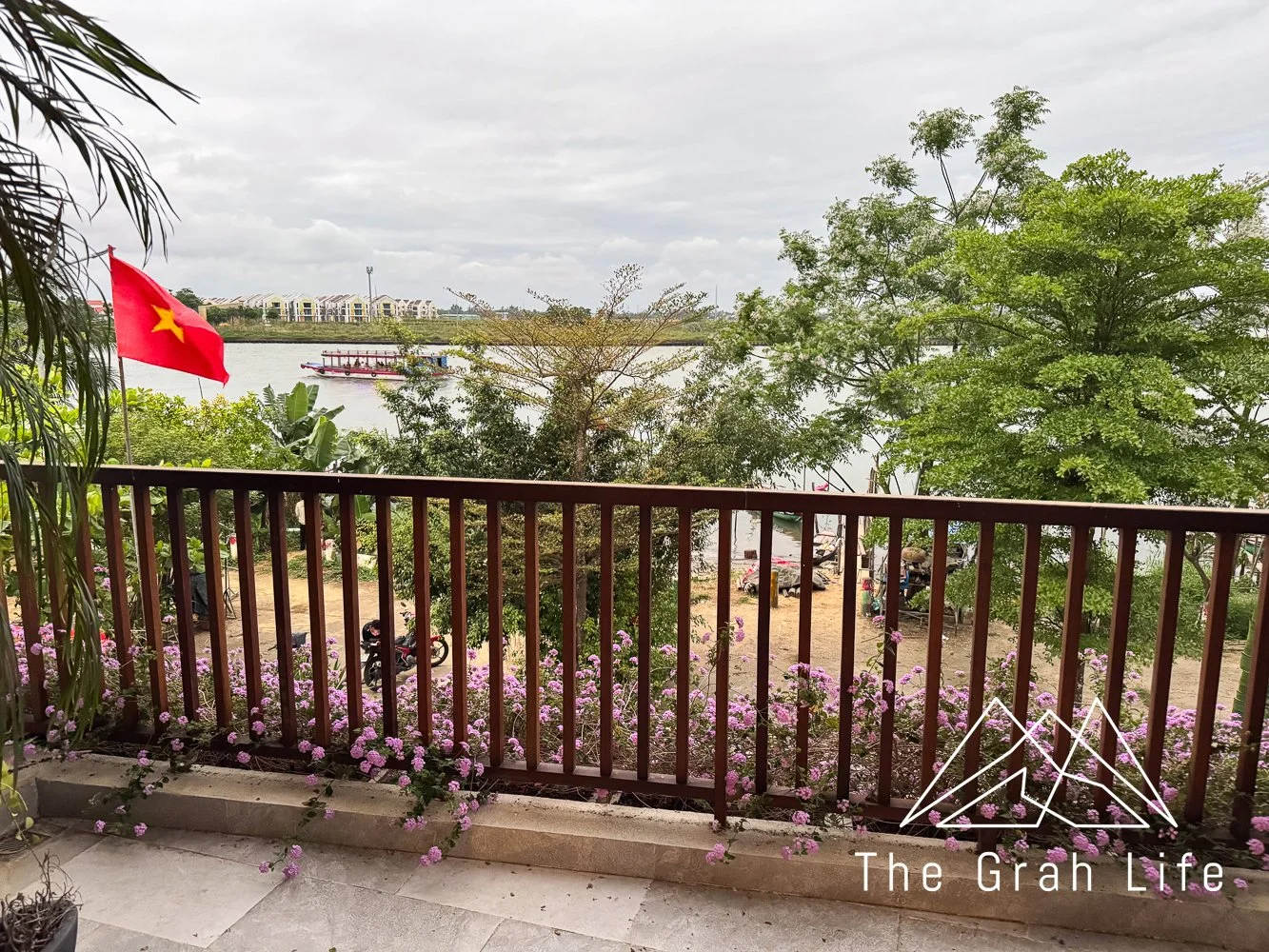
We loved staying near the night market, but you can find all of our lodging recommendations here.
Best activities
Night market
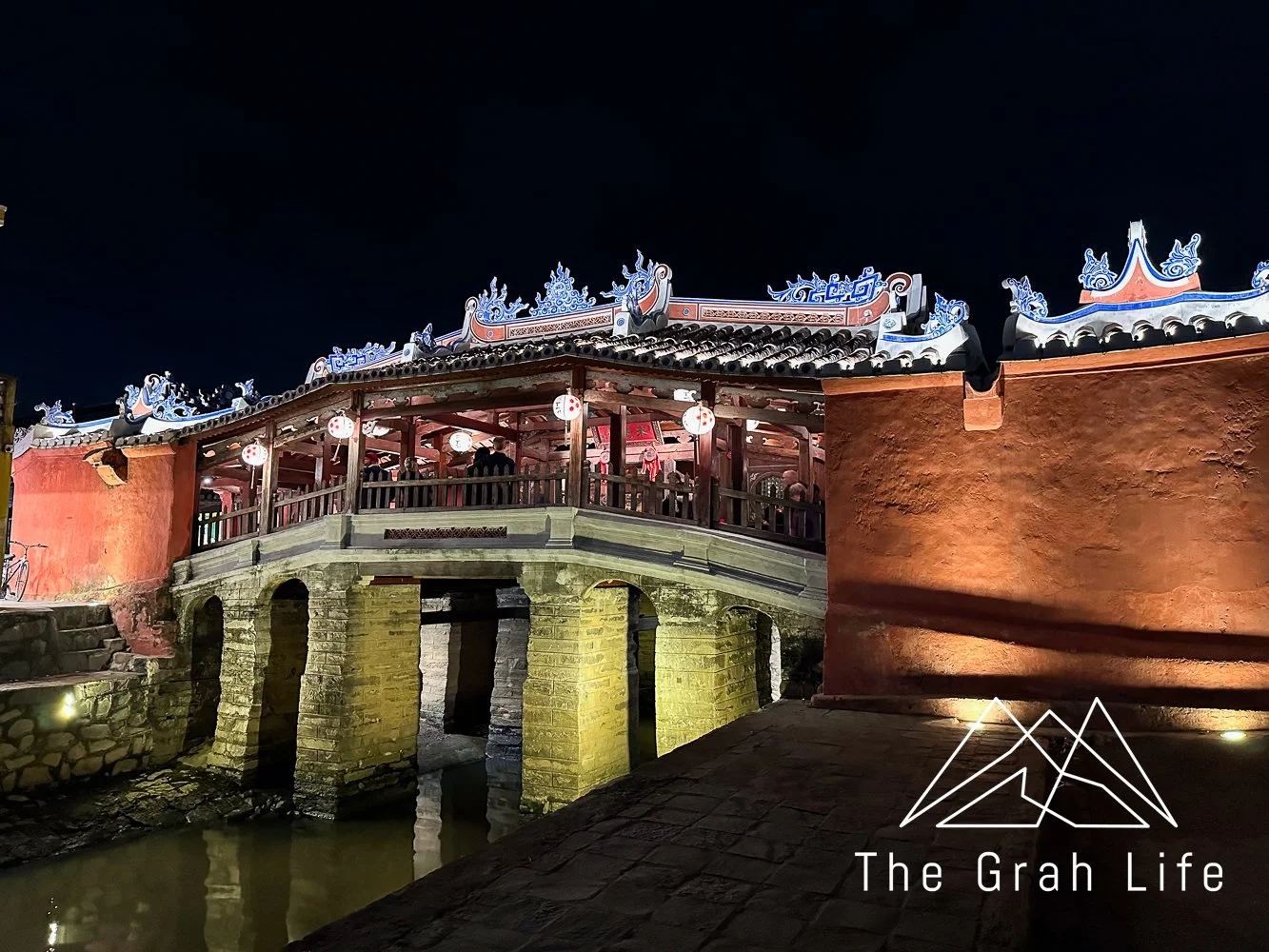
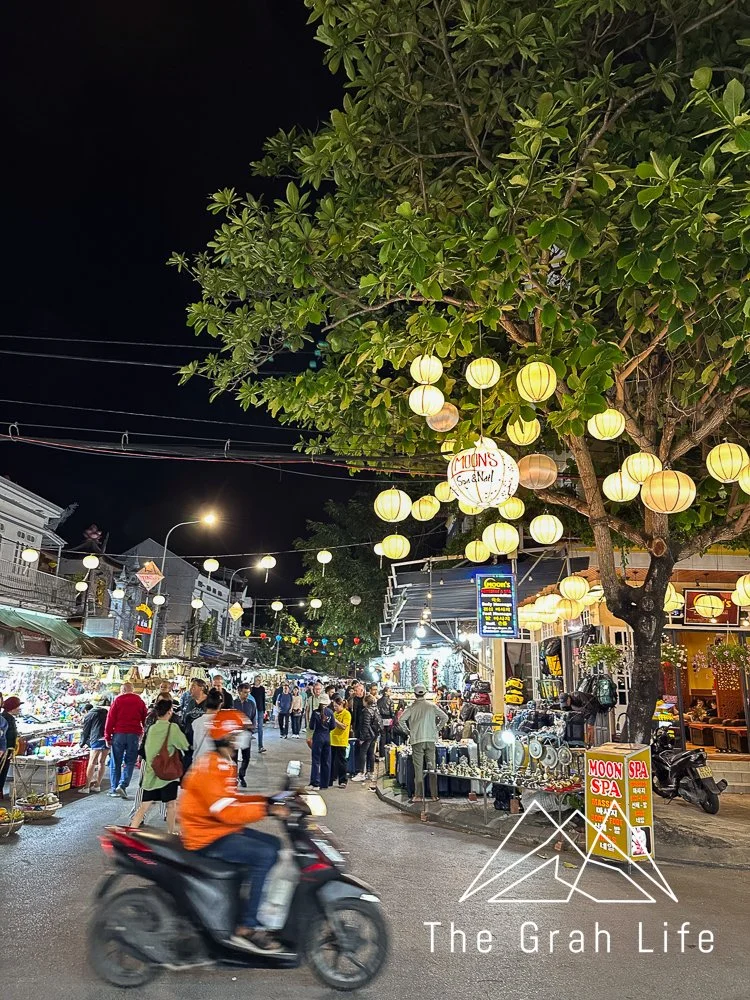
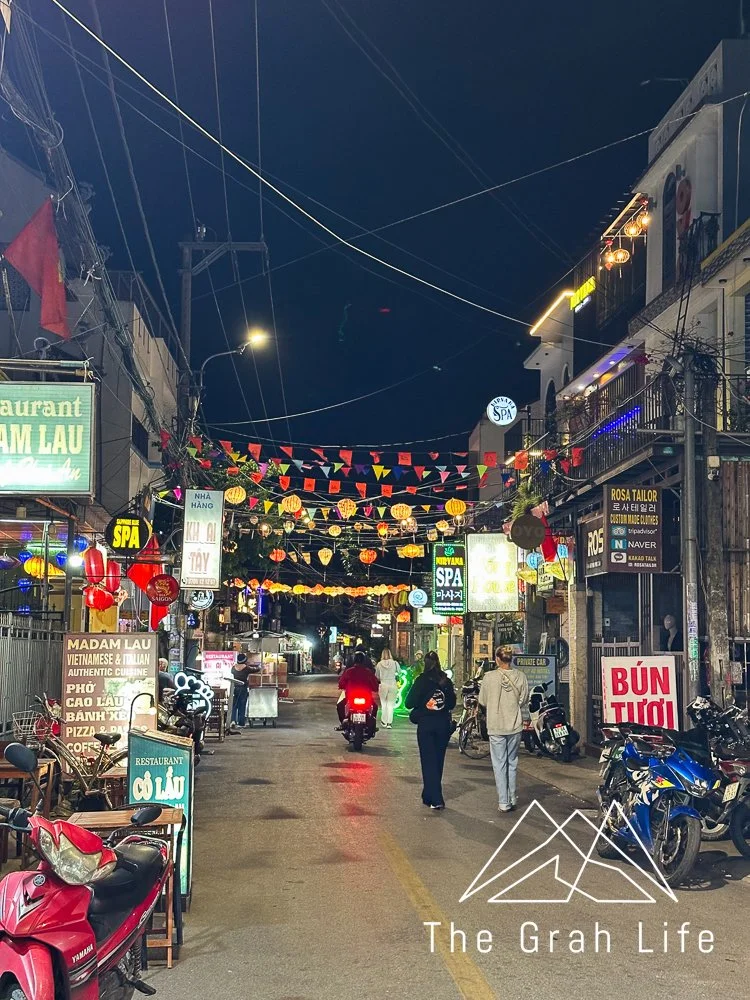
Hoi An is most well known for its night market. It’s a daily occurrence where you’ll find street vendors, performers, and lantern-lit boat rides.
Tailoring
Due to its long history as a trading port on the Silk Road, Hoi An is famous for its tailoring. There are many tailors to choose from, and the shops will help you select the best fabrics, style, and fit. Most shops can complete orders within a day or two, but expect to have one to three fittings.

Zach’s first fitting
Coconut boats
Coconut boats are a traditional, lightweight, and affordable mode of transport originally used by local fishermen to navigate rivers and coastal areas near Hoi An. Today, you can hop in one for a peaceful ride through the waterways, although they’re better known for the way they spin.
These boats are about a 20 minute ride away from Old Town. Prices aren’t fixed, so it’s common to negotiate beforehand.
Nearby beaches
Hoi An is close to several popular beaches, each offering a different vibe. An Bang Beach is lively, with restaurants, bars, and shops, making it easy to spend an entire day relaxing. Cua Dai Beach, on the other hand, is quieter and more laid-back, perfect for a peaceful stroll or enjoying the sea in a calmer setting. Both are just a short drive or bike ride from the Old Town.
My Son Sanctuary
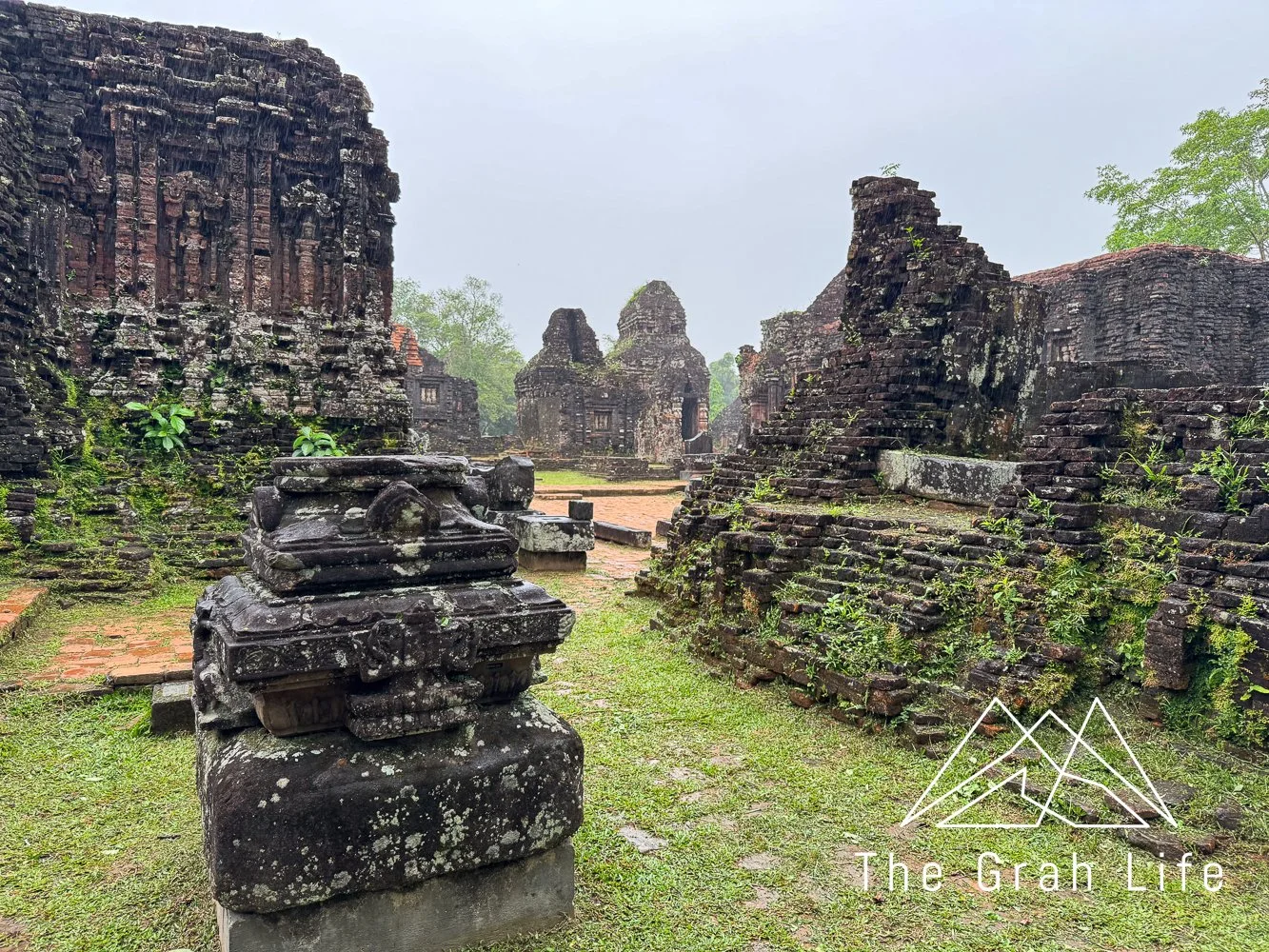
My Son Sanctuary is a cluster of ancient Hindu temples set in a lush valley about 40 km southwest of Hoi An. Built between the 4th and 14th centuries, it served as a religious and political center for the Champa Kingdom. Nowadays, many of the temples are in ruin due to centuries of abandonment and damage from bombings during the Vietnam War.
It’s busiest in the late morning and early afternoon, so arrive early to help avoid the crowds. We chose to visit via this guided tour that included transportation. Thao, the host, knew the area and history well, was fluent in English, and made a huge impact on our experience.
Da Nang Ba Na Hill
Ba Na Hills is a hill station (a mountain resort) located about 40 km west of Hoi An, near Da Nang. It’s famous for the Golden Bridge (the bridge being held by a large set of hands), French-inspired architecture, and cooler mountain air.
The park is open from 7:00 a.m. to 9:00 p.m., though it’s best to arrive in the morning to avoid crowds and enjoy clearer views. Visiting on a weekday or early in the day is ideal, as afternoons can get crowded and foggy. The cooler temperatures make it a refreshing escape from the coastal heat.
Marble Mountain
The Marble Mountains are a cluster of five limestone and marble hills located about 25 km north of Hoi An, near Da Nang. The site is known for its network of caves, tunnels, and Buddhist sanctuaries hidden within the mountains.
Visitors can explore the caves, climb to viewpoints for sweeping panoramas, and see temples tucked into the hillsides. Visit in the early morning or late afternoon for fewer crowds and more comfortable temperatures.
Classes
In Hoi An, you can take a variety of classes to learn local skills. Popular classes include cooking lessons and lantern making classes, but you’ll find options for pottery workshops, bicycle tours, and even calligraphy classes.

Hoi An Memories
The Hoi An Memories Show is a show featuring music, dance, and acrobatics that celebrates the history and culture of Hoi An. It’s about an hour long, located just outside of Old Town.
Food tours
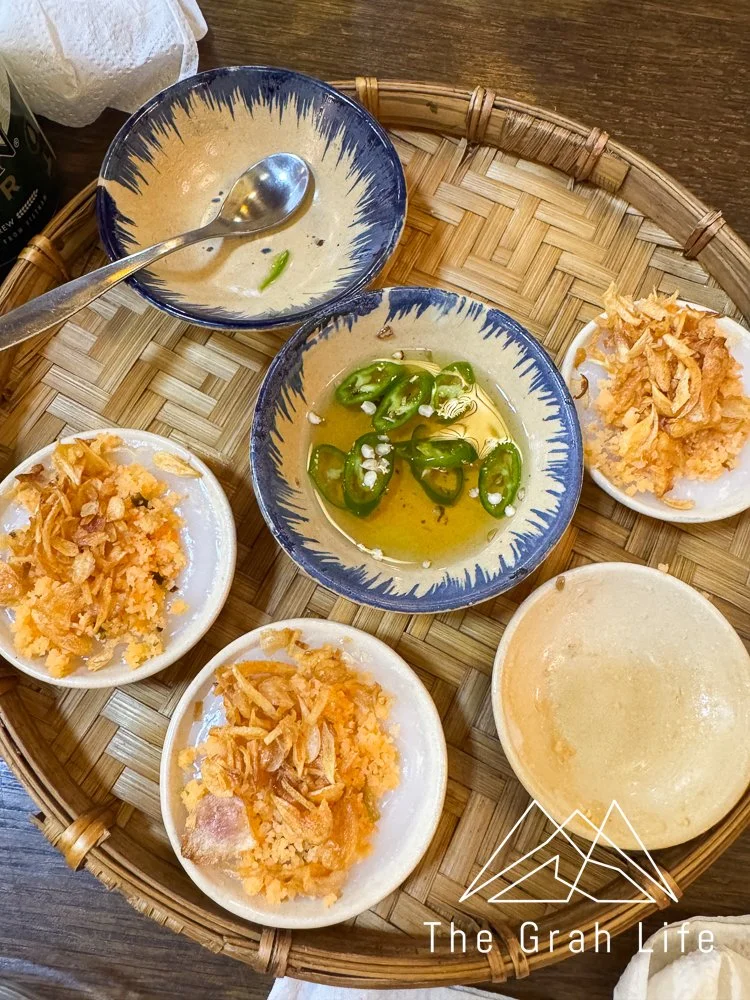
Taking a guided food tour in Hoi An is a great way to experience the city’s local flavors. Tours typically last a few hours and include stops at street food stalls, markets, and small eateries that you might not find on your own. A guide can explain the history behind each dish and help navigate language barriers. It’s also a chance to sample a variety of Hoi An specialties in one outing. We participated in a food tour in Hanoi and it was a highlight of our trip.
What to pack
Check out this blog for everything you should pack for a trip to Vietnam, no matter the season.
Where to go next
Ho Chi Minh City
Ho Chi Minh City is a quick flight away from Hoi An. As Vietnam’s largest city, it’s busy, modern, and full of history. Top activities include touring the Cu Chi Tunnels, the War Remnants Museum, and Ben Thanh Market. You’ll also find plenty of street food, coffee shops, and nightlife – offering a very different pace than Hoi An.
Da Nang
Da Nang is just a 45–minute drive from Hoi An, making it an easy stop before or after your visit. The city is known for its long, sandy beaches, modern skyline, and the Marble Mountains nearby. With an international airport, it’s a convenient hub for reaching other parts of Vietnam.

Hue
Hue is about a three-hour drive from Hoi An. Drive, bus, or take the train there from Da Nang. We drove and enjoyed the ride over the scenic Hai Van Pass, one of Vietnam’s most beautiful coastal drives.
Once the imperial capital, Hue is home to the Hue Citadel (a UNESCO World Heritage Site), royal tombs, and historic pagodas. The Perfume River runs through the city, giving it a slower, more traditional feel compared to Da Nang or Hoi An.



Search the blog for more adventures! Try searching for topics such as “hiking”, “waterfalls”, or “Oregon”.