
What to Pack for a Trip to Vietnam (in Any Season)
The weather in Vietnam varies by region, and the country spans multiple climates. Some areas are more consistent, while the coast and mountainous regions can see rapid weather changes daily. This guide covers what to pack no matter where you go, with tips on how to handle the cooler months, tropical heat, and rainy season.
Know what you’re looking for? Click on a link below to skip to that section.
Disclosure: This post includes affiliate links with recommended lodging recommendations and hiking gear. We’ll receive a small portion of that sale if you click through and reserve lodging or purchase a product. You won’t be charged more, and we haven’t been paid by any of these retailers to share their information. These are all our genuine preferences.

Luggage
These help keep your bags secure in transit. However, they aren’t foolproof, so you should always store valuables in your carryon. Choose a bright lock to make your luggage easier to spot.
These were more affordable than we anticipated and so useful if your bags get lost. Plus, they provide nice peace of mind when you can see that your bags have made it on your plane.

Packing cubes
If you haven’t used packing cubes yet, this is your sign to buy them. They are a game changer in helping keep your suitcase organized – especially when you’re moving from place to place. We love them so much that we have two sets.
Our first set is mesh like this set and we love that you can see through the bags to know what’s inside.
This set from Gonex (Amazon link here) is water resistant – perfect for more adventurous trips – and each bag has an expandable zipper, so it’s like having two size options per bag.


Some of our Airbnb's had washing machines for us to use on site, while other hotels did it for us. Having something to tote our clothing back and forth in was a huge help.

Clothing
Year round
Look for raincoats with pit zips — arm pit zippers or vents — to help moderate your temperature. No raincoat is completely waterproof, so don’t get caught up in the lingo. Purchase a water resistant/waterproof coat from a reputable brand and you should be good!

Pajamas
You’ll want lightweight, breathable pajamas for humid nights.
If you bring tops that are not suitable for temples (showing your shoulders) bring a scarf to cover up with. These also double as an extra layer on flights.

Cooler temperatures
Cooler weather usually lasts between November and March, especially in the northern mountainous region.
Fleece zip-ups (men’s/women’s)
Wear this on its own or under your raincoat for an added layer of protection. The high humidity, in places like Hanoi, make temperatures feel much colder than usual.

Winter coat
If you’ll be traveling in Northern Vietnam, you’ll need a warmer setup. A packable puffy coat (men’s/women’s) paired with a raincoat is the most travel-friendly option.
Warm accessories are especially needed in the mountains, but mornings can be chilly in the lowlands as well.
Base layers tops (men’s/women’s) and bottoms (men’s/women’s)
Pack base layers to stay extra warm. They shouldn’t fit too tight and should feel comfortable underneath your clothing – it’s the air trapped between layers that keeps you warm.
Pants
Pair your base layers with jeans, trekking pants (men’s/women’s) or wear insulated leggings.
Tops
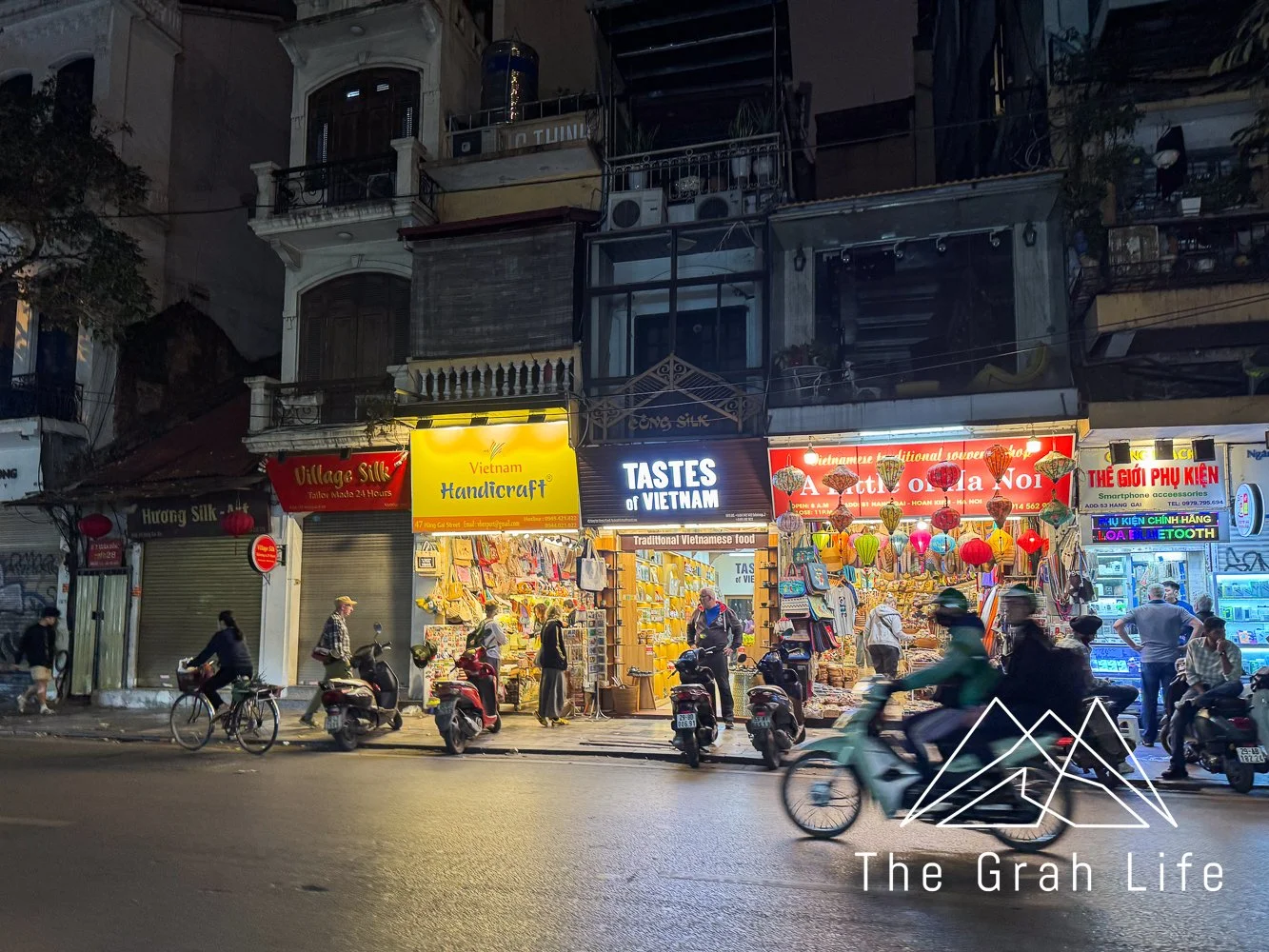
Bring warm tops like sweaters, long sleeves, and t-shirts to be prepared for a variety of weather. If you’re coming from a colder climate, the temperatures may feel warm at the beginning of your trip, but you’ll adjust and feel colder by the end of your trip.
Warmer temperatures
You’ll want a light layer to wear in the mornings and evenings when the temperatures dip, especially in the coastal regions.


Sun hat
The sun is harsh in Vietnam – bring a sun hat (men’s/women’s) for better odds at not getting sun burned and to use less sunscreen.
Swimwear
Bring modest swimwear for beaches and pools.
If you’ll be traveling between May and October, it could be monsoon season depending on the region. Come prepared with a packable umbrella.

Footwear
Walking shoes
You’ll spend a lot of time on your feet! Bring a great pair of walking shoes – we especially love these Brooks (men’s/women’s) – but if you’re visiting in winter, you’ll want your shoes to be waterproof like these ones (men’s/women’s).
Socks
Wool socks are best to prevent blisters and wick away moisture. Find lightweight summer socks here (men’s/women’s) and warmer winter socks here (men’s/women’s).
Sandals
Bring a pair of flip flops or Chacos (men’s/women’s) for water-based activities like kayaking or riding the coconut boats in Hoi An.

Personal items
Water filter
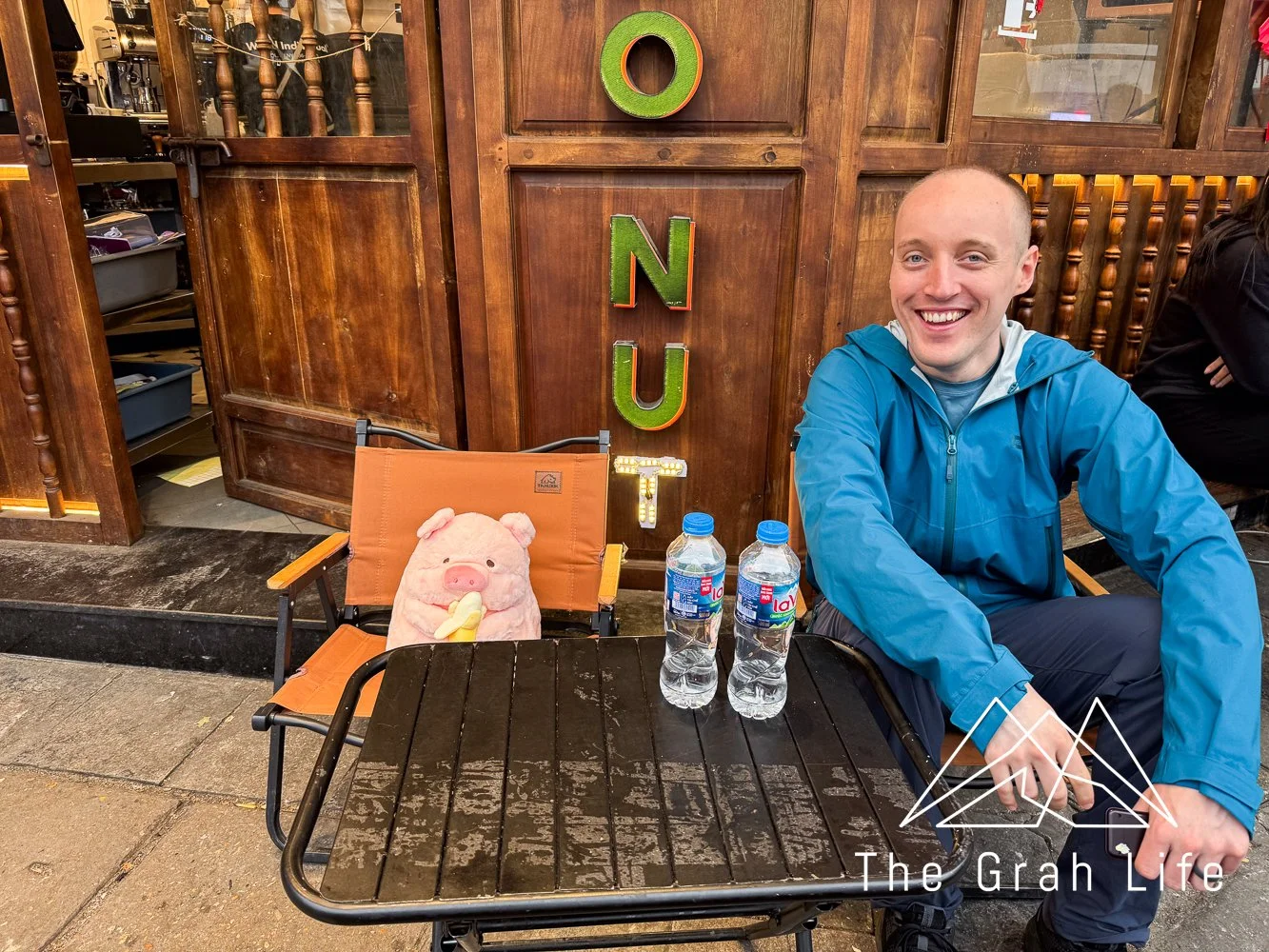
Tap water is not safe to drink (including ice at some locations). To ensure that you’re drinking safe water you can:
Buy bottled water in Vietnam
Filter your own water using a filter like this one – bonus is that it also attaches to standard water bottle sizes
Bring a water bottle with a built-in filter like this one
If you do bring a filter, pack it in your carry on and keep them above freezing temperatures, otherwise they do not work correctly.
Bag
You’ll want a small bag that you can fit a few items in while you walk about town. Bonus if it is water resistant and RFID blocking, like this fanny pack.
RFID blocking wallet
If you don’t get an RFID blocking bag, get an RFID blocking wallet like these slim Ridge Wallets – we love the ones with the cash strap vs a money clip.

Vietnam can be bright and sunny year-round.
Handheld fan
If you’re visiting southern Vietnam or traveling between April and November, bring a handheld fan. We love that this one rests on your shoulders, keeping your hands free, but we also love this handheld fan that can double as a nightstand fan.
Cash
Both cash (Vietnamese dong) and cards are used in Vietnam, but cash is more widely used, especially at smaller shops and in rural areas. Cards will be accepted, with a fee, at larger restaurants and stores.
Check to see if your bank will allow you to exchange currency at home or use an ATM upon arrival.

Toiletries
You’ll want all your standard toiletry items including the following: travel size toothbrush, toothpaste, floss, brush, razors, shaving cream, shampoo, body wash, and facewash.
These were very convenient to freshen up mid-day, and we even used them on the long travel days we flew in and out of the country.

Facewash wipes were especially useful on our trek through Son Doong
Toilet paper
Not every public bathroom will have toilet paper. Pack a couple travel size rolls and you can purchase more in country if needed.
If washing your hands isn’t possible before snacks and meals, use sanitizer! This will help keep you healthy throughout your trip.
Insect repellent
Depending on where you visit, Vietnam can have mosquitoes year round. We love this bug spray made of essential oils. We’ve found it to be just as effective as deet.

Sunscreen
Vietnam has high UV ratings, meaning the risk of sunburn is higher, especially in the south. We like this sunscreen because it has the safest product rating for sunscreen on the EWG’s Skin Deep guide.
Put this on before you start any day that you’ll be walking a lot to prevent chaffing.

Medicine can be hard to find in Vietnam so it’s best to pack your preferred painkiller like Tylenol, allergy medicine like Benadryl, Imodium in case of traveler’s diarrhea, and Dramamine if you get seasick or car sickness.
Pack electrolyte tablets in case of dehydration and activated charcoal capsules to help an upset stomach. Include a few KN95 masks as well in case the of poor air quality as well.
Personal medication
Check with the CDC and your doctor to see if you should get any travel vaccinations prior to your trip. Malaria pills are often prescribed.

Paperwork
Visa
Most nationalities will be required to apply for a Visa before arriving in Vietnam. Read more on this here.
Passport
Don’t forget to pack your passport and make sure it’s valid for at least another six months.
Paperwork copies
Have copies of your Visa, passport, and itinerary for reference and emergencies.

Electronics
Chargers
Bring charging cords for your phone and other devices.
Travel adapter
Vietnam uses 220V A, C, and D plug ins. This travel adapter will work for all of these and more.

Prepaid SIM
Getting a prepaid SIM is a great way to have cell phone and data service when traveling abroad. These plans are often much more flexible and affordable than purchasing international data plans from your home country's carrier. There are a lot of companies who offer prepaid SIMs that are valid in Vietnam – we recommend ordering online before your trip so you're ready to activate it at the beginning of your trip.
This is optional, but it was helpful to have on our longer travel days. Running GPS burned through our phone batteries and being able to charge them on the go gave us peace of mind.

For the flight
Bringing an eye mask on long flights is a game changer. Wearing one will help you sleep no matter what your seat neighbors are doing or when the plane lights come on.
Neck pillows
This neck pillow is the best out there. If your seat has a smaller headrest, there are straps that fit around it to keep your head from bobbing.
Headphones and ear plugs
Pack these to stay entertained or block out noise. Ear plugs are great for helping you sleep in the city, too – street noise starts early!

Snacks
Having snacks on hand is so helpful when planes get delayed, to have between layovers, and on long travel days. We like to bring Luna Bars, trail mix, and jerky.
Compression socks (men’s/women’s)
These helps aid in circulation and prevent swelling in your legs – they’re essential for long flights.
Sleep aids
Take half a Unisom tablet to help fall asleep on the plane or adjust to a new time zone once you’ve arrived. Just test using it make sure they don’t have adverse effects before your trip.
Call Meghann a germaphobe, but she insists on using these on every flight. Wipe down all the surfaces you’ll be touching to prevent from getting sick at the start of your trip.



Search the blog for more adventures! Try searching for topics such as “hiking”, “waterfalls”, or “Oregon”.